Thanks to a chance meeting in a Clerkenwell street the other Friday lunchtime, we heard from urban bird photographer Daniel Lomas who sent us some amazing pictures all taken in an urban environment.
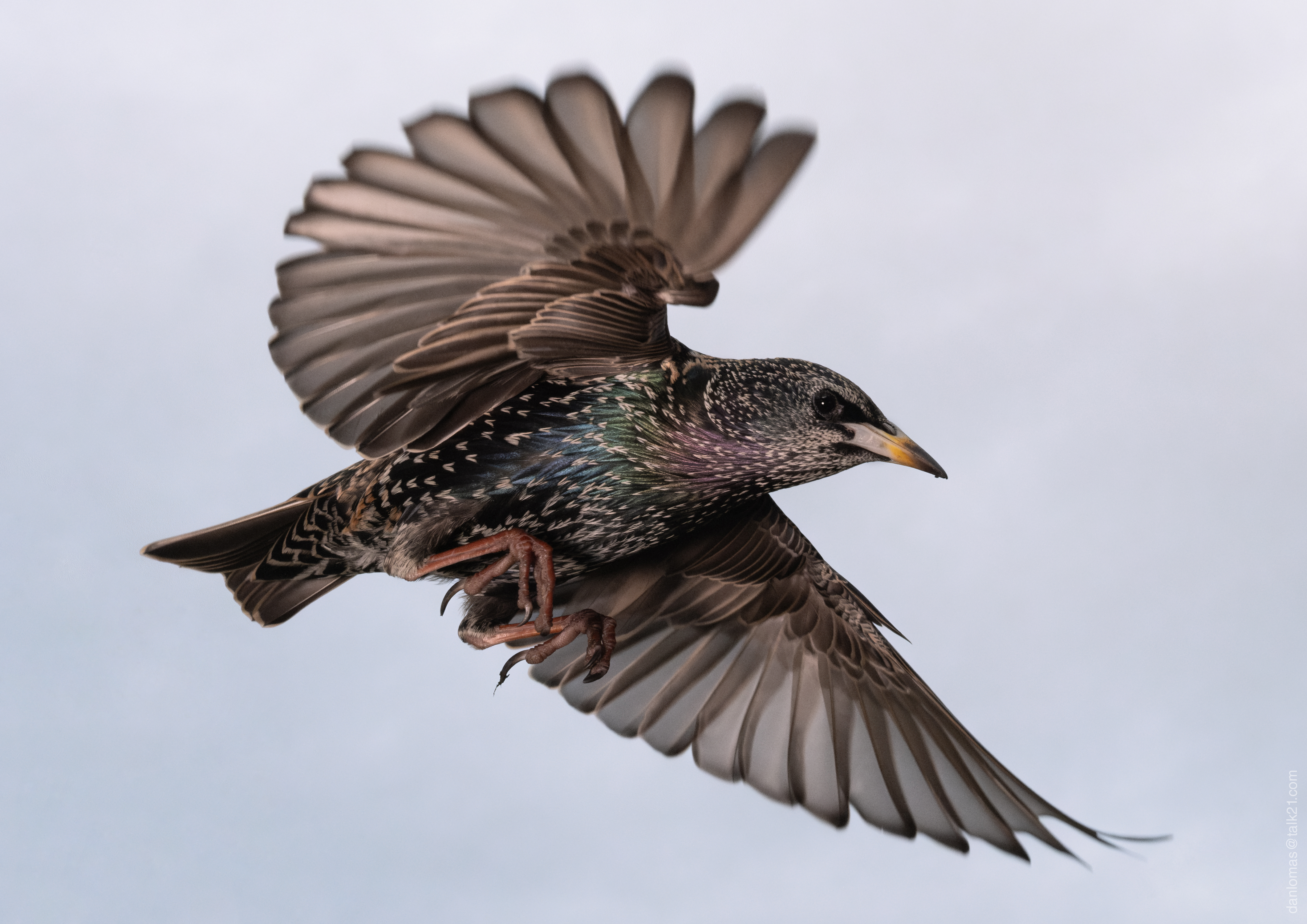
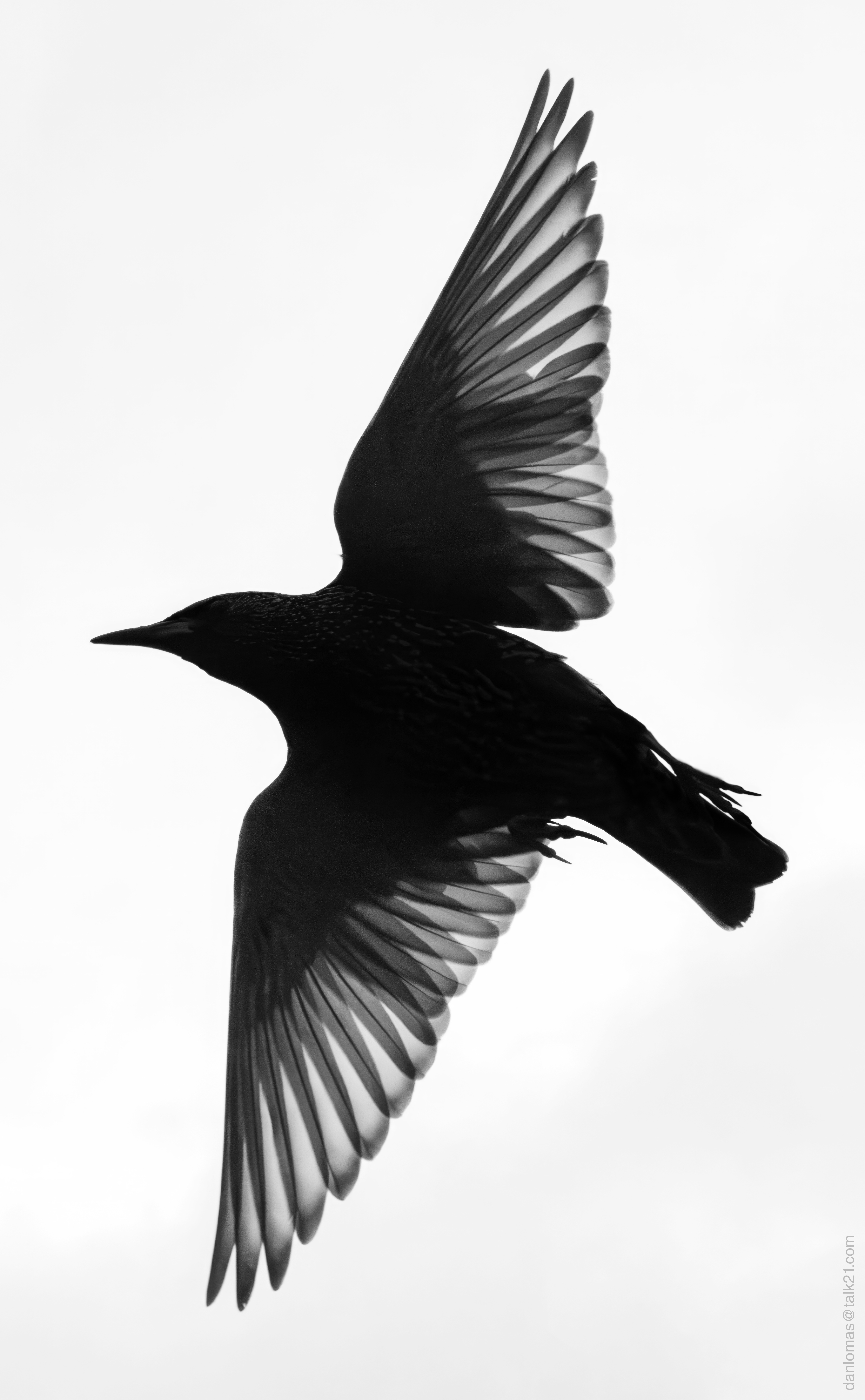
As he emailed “Mostly, I photograph Starlings. I’m two-and-a-half years into photographing them for five years, the average lifespan of a starling. Their numbers are in a precipitous decline, an early indicator of the stress the UK environment is under, link here …I’m drawn to maligned species – starlings, grey squirrels, gulls, rose ringed parakeets – because they form a mirror to human values.” (Starlings above and below), you’ve got to agree, they are super photographs.
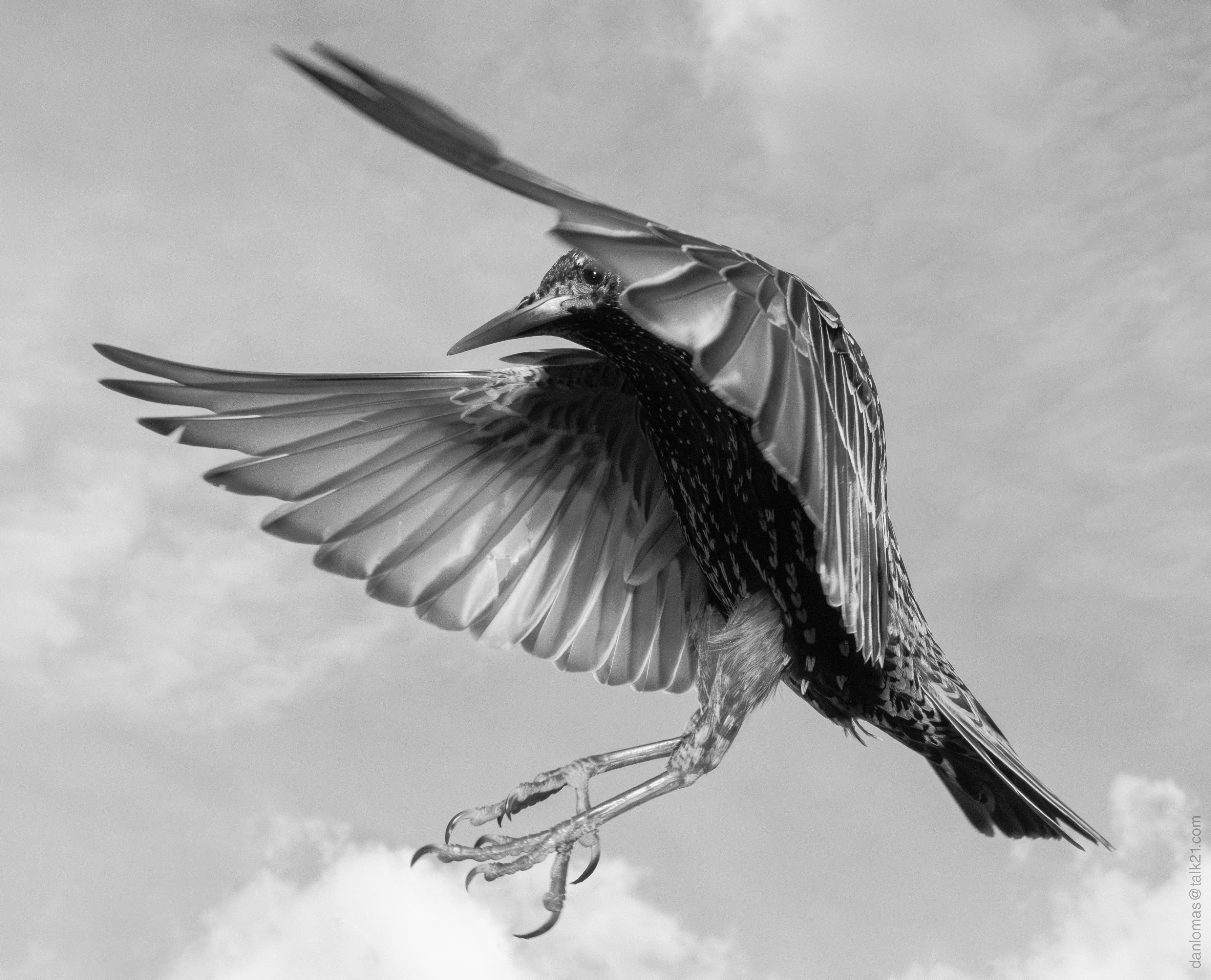
We honestly didn’t know that much about starlings apart from the obvious to our shame, and Daniel compiled some interesting fun facts about the species:
- One human second equals Two-and-a-half staring seconds, which is why their coordinated flight looks so impressive to puny humans!
- Their raised nostrils reduce air pressure at the nostril opening making it easier to breath at speed – it’s the same physics behind the lift generated by the profile of a wing.
- The small alula feathers half-way along the leading edge of wing are the Starling’s thumb. Alula feathers indicate how manoeuvrable a given species is – when raised they ‘stick’ the air back onto the wing at low speeds.
- Like most birds, they are tetrachromat, meaning they see a wider spectrum of colours than a human, one that includes ultraviolet. Think crows are black? Think again!
- Like all vertebrates they share the same endocrine system as humans (hormonal system). Meaning their happy/sad/horny/angry hormones are in common with ours
- They are the only bird species whose beak is strongest when opening (as opposed to closing). They use this adaption to make holes in the ground when searching for insect larvae – consequently, they are very good for the health of your lawn.
- You can reliably gender starlings by their eyes. White ring around the iris = female
- Individual birds have distinct personalities, some radically so – for two years a male bird I called ‘Footloose’ would land on my head for some calm away from the squabbling flock.
Brilliant stuff Daniel! We had no idea and can believe that they all have distinct personalities.
He also sent us some pictures taken around Wilmington Square, Clerkenwell with these notes attached:
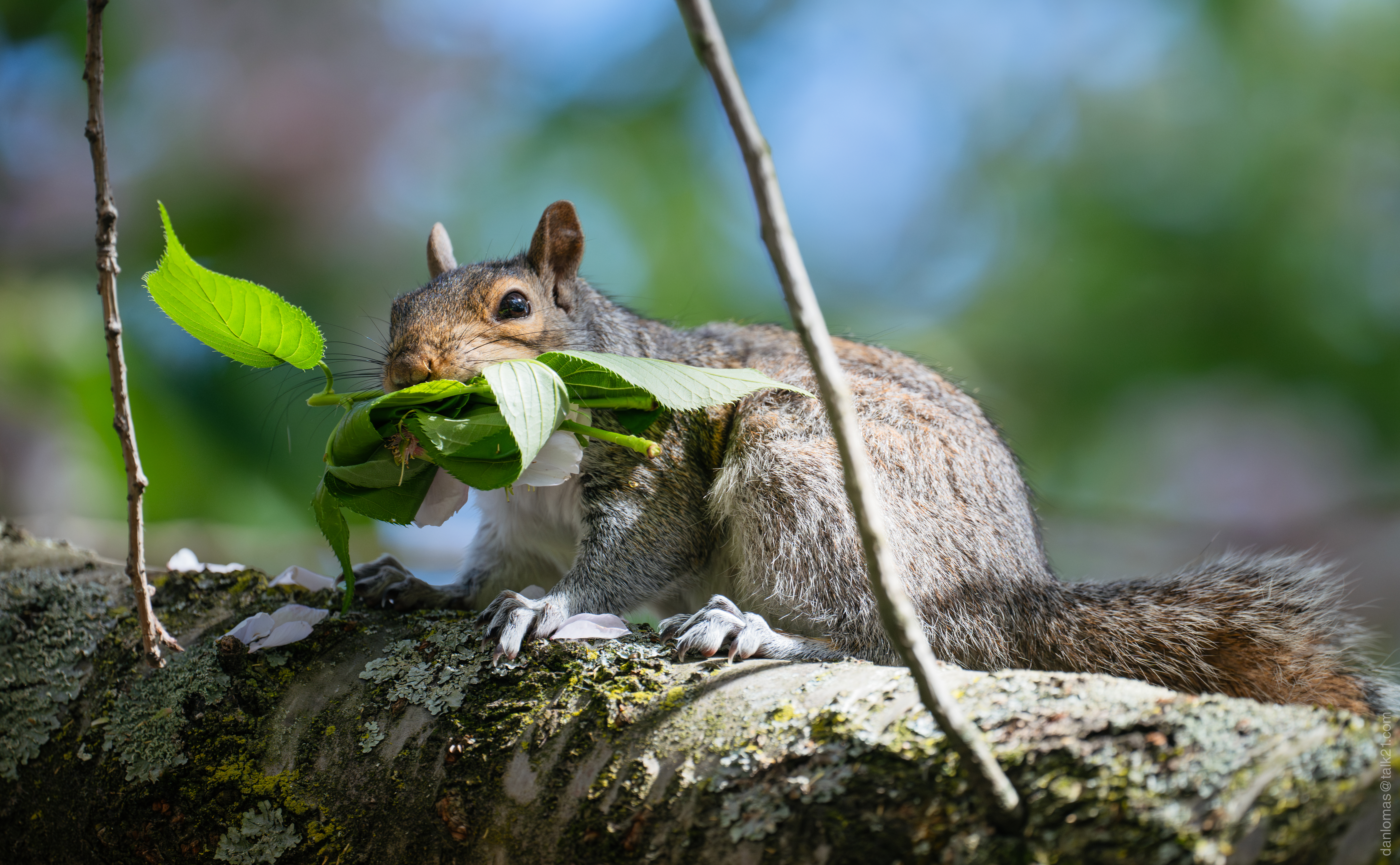
Pic above: Grey squirrel lining his nearly complete dray (squirrel home) with tender blossom shoots.
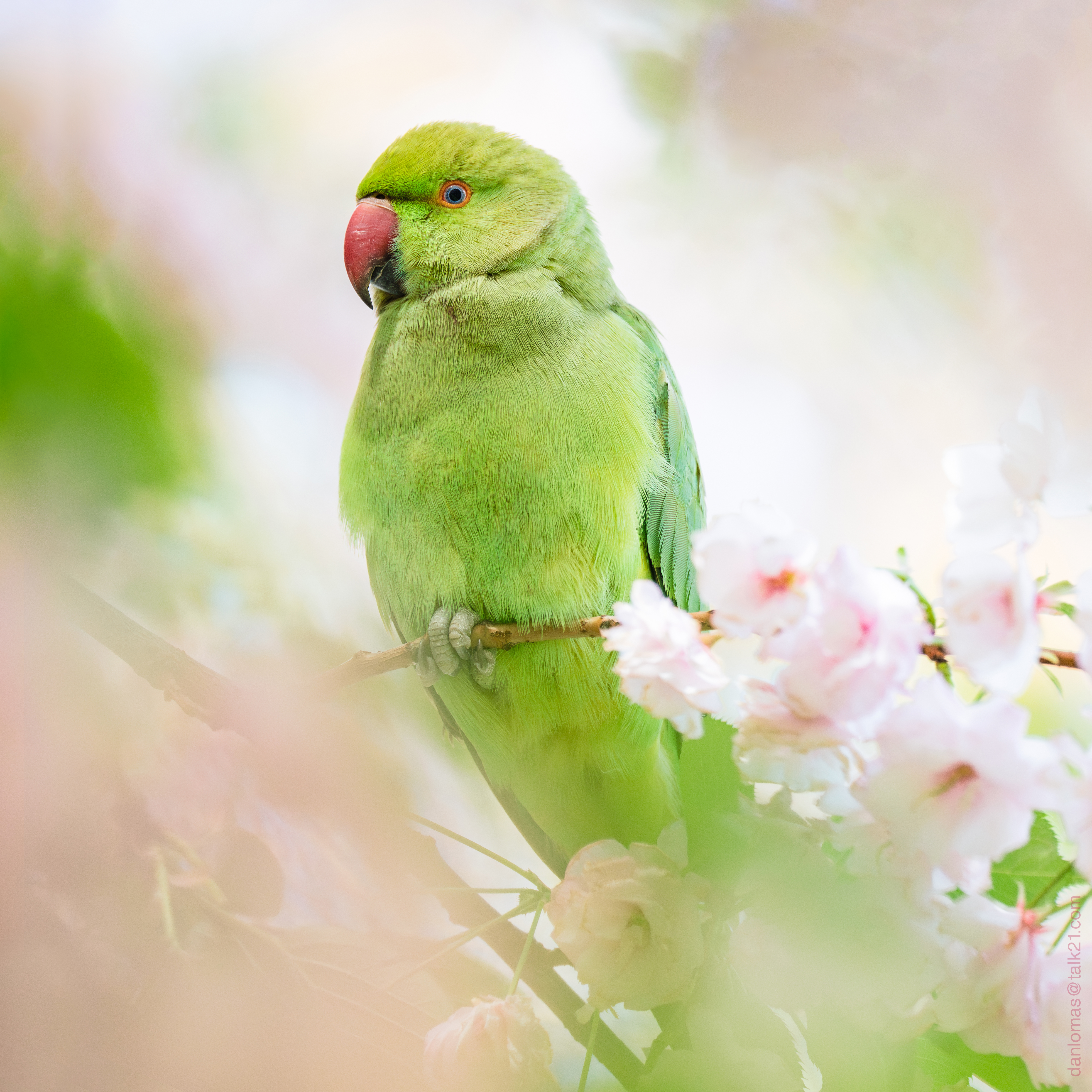
(Above) Rose ringed parakeet – just two feet below the squirrel in the same tree at the same time! They are a resident pair, and if you get lucky you can see them allogrooming – strengthening their social bond by grooming each other.
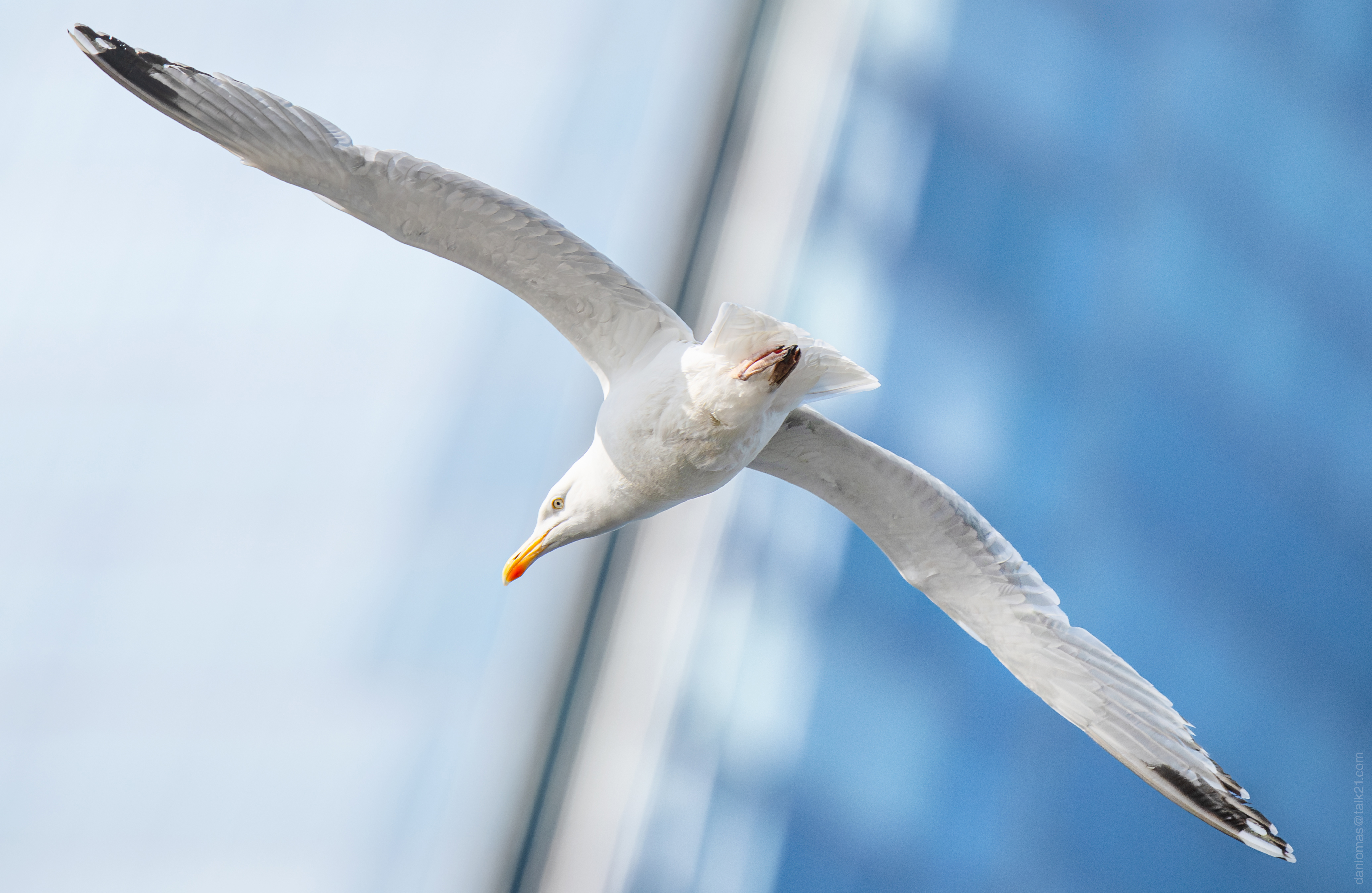
And finally, a photograph of a Gull flying past the shard – taken about an hour after we initially met in the street. Daniel added “There’s a good mix of juvenile gulls in London’s population. The first aspect of the landscape a gull learns to navigate by is the river, so at dusk the Thames becomes a gull-corridor. They are incredibly fond of the turbulence (free energy) that comes off London Bridge, using the structure to both play and regroup into larger flocks. I’ve seen a single gull with distinctive plumage play for over an hour”
Absolutely brilliant stuff Daniel and do keep us updated with some more photographs as these are impressive to us here! Thanks again for sending them over. More info on Daniel’s work here.