These boots are made for working…

If there’s ever been any regrets in my life, the biggest one was getting rid of my steel toe-capped boots when I left the council, thinking I’d never use them again after studying graphic design.

I loved those old boots. They were black and had never been polished so were well scuffed and at the front, the leather was so worn away about a quarter of the “steelie” was showing through. They’ve been ran over by my lawnmower, took many a flying brick from the whizzing mower blades and had lots of incidents with misplaced garden forks and spades, so had a “used” look to them. You could have definitely worn them to a Cramps gig!

The downside was that they were freezing when you put them on on a cold winter’s morning, stunk like high heaven mid-summer and were heavy like lead after digging on a wet day with all that London clay stuck to them.

Todays workers have never had it so good, as nowadays the style of protective steel capped footwear are limitless, from beige CAT builder’s boots, backless ladies moccasins and trainees but years ago there was only one style, the Totector boot only available in two colours, black or dark brown. They should be a design classic and be on show at the national museum of gardening alongside a donkey jacket as an example of ancient council workwear.

What’s your favourite gardening footwear? Do let us know and photo’s please!

Leaf it out, John

If you want to make yourself a great soil conditioner without spending anything (something that really appeals to me) and simply recycle what nature gives you, rake or sweep up all the dead leaves you can find in the garden (nothing evergreen, such as holly, laurel or conifers), stick them in plastic bin bags and slightly dampen them if they are not moist already. Put the bags in a corner and forget about them for about a year or two and you then should get some great “leaf mould” that’ll perk up your soil no end. It takes hardly any effort as nature does most of the work for you. And all for the cost of a bin bag.

When working for the council, the leaves used to be a constant pain in the autumn, the endless raking, sweeping and bagging up, only to come back the next day to more of the same. I had a mate, a park keeper who’d tell me he’d never had hassle with leaves and one day told me his secret. What he’d do is, use a leaf blower to blast them through the railings of the park into the road for the poor old roadsweeper to collect and bag up. Council workers eh?

Save “On The Wire”!

A couple of weeks ago on the show, Steve Barker mentioned that the BBC will be soon be making cuts in their “drive for quality” initiative. It looks like they are thinking of replacing all local radio programmes in the evening sometime between now and April 2013. This will effectively cut all specialist shows over the whole of the BBC local radio network including On The Wire on Radio Lanchashire which has been running for over 25 years playing the best in reggae and left of centre gear. This is a cracking show which will sorely be missed if the blinking BBC have their way!

The proposals are subject to public consultation by the BBC trust. So fire off a letter now to Lord Patten, Chairman, BBC Trust, 180 Great Portland Street, London W1W 5QZ and tell him you disagree with the BBC’s initiative or go to http://www.bbc.co.uk/bbctrust and look for the “consultation” button

Respect due to Steve Barker, Fenny and Jim.
Keep up the good work and don’t let the beeb trust grind your down!

Have a listen http://otwradio.blogspot.com/ and you won’t be disappointed!!

That’s a lovely box

When I was younger, I used to think men who kept screws and nails in tins with labels like “3/4 inch self-tapping” and “flat countersunk heads” were boring old gits who had no mates and spent far too much time on their own in garden sheds.

It’s funny as I get older, I’m liking putting things into tins and boxes. I’ve got plastic garden ties in a jam jar, used garden wire in another and my seed collection is split into “veg” in a lovely oval Scottish shortbread tin and “flowers” in a Persil non-bio plastic container. Those who don’t remember the past are condemned to repeat it, eh?

Thinking about boxes, when we were kids at Christmas my mum used to buy a big tin of Family Circle biscuits as a treat. Rather than let us all dip in and take all the best ones, there was a rule in our house that we could only had “two plain and one fancy” per sitting. Under the plain category were Rich Tea and the like, with fancy being Bourbon and above. The pinnacle of the biscuits would be the chocolate coated ones in coloured foil which you’d only get five per tin. The youth of today have never had it so good, bring back national service etc.

What’s your favourite box or tin? Do let us know.

Beware of the flowers

(and the Rottweiler, whose sure gonna get you, yeah!)

I woke up this morning after having a dream that I had to write a speech for Bruce Forsyth but I couldn’t get any further than the “nice to see you, to see you nice” part. Not good, anyway I digress.

So you’ve got the garden, the tools and the seeds, now you’re ready to roll. Traditionally you sow the seed indoors or under glass in the spring, plant out after the frosts, weed and feed throughout the summer and harvest from late summer to autumn. As it’s at the end of the growing season, now is the best time to get the plot prepared before the winter, which will give you a head start for next year.

The secret to gardening is “little and often” and only take on a little bit at a time. So if you’ve inherited a large plot, just cordon off a small area and start on that (the other parts can be covered with sheets of black plastic to slow down the weed growth).

When we first moved into our house, the place was in a terrible state, including a rottweiler flap (aka a big hole) kicked out of the back door. The  garden had not been touched for about twelve years and it took us a week to realise we even had a pond at the bottom of it!

The first night we sat outside our back door having a drink with a good mate of ours hearing all sorts of movement in the the towering undergrowth in front of us, after ten minutes deciding to go back indoors as it was too mental! I even ruined a brand new flymo the first time I tried to cut the lawn, constantly ducking while old wooden clothes pegs whizzed past my head and finally smashing the blades on a half-submerged kid’s bike (I didn’t tell customer services that when ringing in for the replacement part!).

It took us about three years to get some sort of normality in the garden as we’d been busy doing other work on the house and it’s still a work in progress. So I’ve learnt to take it nice and easy as life is not like 60 minute make-over.

The first thing to do is to clear the area of brambles and woody debris which can be burnt later on. Use a good pair of secateurs, council-worker type gardening gloves and a spade and get out all the roots. Then start clearing all the weeds, don’t use a rotavator as new weeds will grow from the roots if you divide them. If you are going to do it organically without weedkiller, you will have to dig out out all weeds and their roots by hand and that will take time. Get rid of any builders rubble, bricks and large stones as you go along and then use a fork to break up all the soil. To get the best possible conditions for your veg, get a soil testing kit (from your local garden centre or the internet) and see if any adjustments have to be made to the soil (more in a later post). Finally fork in some good organic material, ideally rotted down compost, leaf mould or make a compost trench with a layer of vegetable peelings, old newspapers, straw, grass clippings, etc to rot down in situ.

A bonus to any garden is a compost bin which can be made out of wood, old carpet or try your local council who might have a free composting bin scheme. Making your own compost is easy to do, great for the environment and encourages wildlife. You can throw in all your vegetable peelings, old flowers, tea bags, coffee grindings, lawn clippings, eggshells even thin prunings if they’re not too woody.

If your soil is really poor how about making a raised bed, made out of scaffolding boards, stone, railway sleepers or any timber and they can be filled with decent compost and you can tailor make the soil to the plants you want to grow in them. They can be at a good height if you hate all that bending and they need less maintenance, which is a bonus.

So prepare the soil now (and do it as thoroughly as possible as those weeds will come back to haunt you!) and keep an eye on the bed over the coming months and knock off any weeds wtih a hoe, which might try to come through and you’ll save yourself a bit of effort in the spring.

Saturday down the Walworth

Yesterday I attended a great “growing and using herbs” gardening course at the Walworth Garden Farm in SE17. The cost was an amazing zilch and I even took home a planter of Lemon Thyme, Chocolate and Apple Mint and Sorrel alongside lots of great tips and handy gardening hints. The teacher was excellent and catered for the beginner and intermediate gardener alike. It’s brill that there are courses like this around.

Lunchtime was spent down the Walworth Road (re-living the late 1980’s when I used to attend the London College of Printing) popping into Arif’s bakery for a potato & spinach pasty and an eccles cake, watching the aggressive queues at the cashpoints then followed by fighting with the older generation with their shopping trolley’s in Somerfield. Back at the farm in the afternoon, we spent learning about the uses of herbs and then choosing a selection to put into a planter.

If you are in London I would definitely have a look at the courses there (Gardening as well as Beekeeping) as I can’t praise this course highly enough! If you do live outside of the capital have a look around as there has got to be courses like this nationwide.

Thanks to Scarlett at The Walworth City Farm, keep up the good work!

More details at http://www.walworthgardenfarm.org.uk/introduction-gardening

You know the drill…

So where do I obtain those veg seeds to put into the garden when the weather perks up in the spring?

It’s a piece of cake growing vegetables from seed and it’s a simple as going to your local garden centre and choosing a suitable variety. Depending on the type of seeds, they’re not going to cost you more than £2.50 a pack which isn’t bad considering the value of the edibles you’ll harvest (which will taste a million times better than shop bought ones anyway).

As I’m forever watching the cash in my pocket, here’s some ideas for obtaining them at a reduced rate:

E-bay
I’m getting a lot of my seeds off e-bay at the moment as they are a lot cheaper that the shops but we still should support our local garden centre in other ways or they’ll go bust! You get great variety, good seeds and notes off the seller saying “Happy gardening, love Bob”. Now thats service!

Seed swaps
You get far too many seeds in a packet, so sow very lightly and save some to sow a fortnight later for successive sowing (so the harvest will be staggered and won’t come all at once) and some to swap with your gardening mates. You can find out more about organised seed swaps through asking about at gardening clubs, allotments or have a look at http://www.seedysunday.org

Special offers at the end of the growing season
DIY shops like Robert Dyas sell off packs of seeds cheap at the end of the growing season or when the packet’s sell-by date is fast approaching. Seeds can still germinate after the use-by date, the chances are a bit slimmer as the months go by, so sow them a little bit thicker than you normally would to compensate. I was told recently that seeds are still good to sow up to five years after the sell/use-by date.

Garden magazine freebies
Seeds, bulbs and plug-plants are usually given away free with gardening magazines to get readers in, so keep a  look out in the newspaper shop or those market stalls that sell recent back issues.

TV/Web promotions
The other year the BBC had their “Dig In” campaign where they gave away packets of vegetable seeds to encourage people to grow their own which is very commendable. The RHS have also also done similar promotions. Google “Free Veg Seeds” and check gardening forums on the web to find out what’s being given out and where.

Sunday paper offers
At certain times of the year Sunday papers do free bulbs, veg seeds and plug plants just for the cost of postage. Okay you are supposed to buy other stuff with it but I can never afford it. Most of the Daffs in my front garden are from The Observer or Saturday’s Guardian postage only specials!

Plant sales
Gardening clubs and allotments do plant and seed sales which are great for bargains and for rarer varieties, have a look in the local paper, on the internet or ask around at your local allotment. The Horniman Museum in South London does a very good one so I’m told.

Shops that don’t usually sell gardening stuff
There’s a shop nearby in Brockley called “Sounds Around”. This is a fantastic shop, described on the web as “Woolworths on steroids”, now that’s a recommendation! They sells pink plastic picnic plates, clothes pegs and porcelain teddy bears but also do a fantastic line in tomato plants. On holiday in Cornwall a couple of years ago the local Spar was doing some healthy Kale plants very cheaply. Keep a look out for plants for sale in odd places.

Getting seed off your own plants
Collecting seeds off your own plants, letting them dry out first then putting in a paper bag will save you some cash. I’ve had success with my own coriander, squash and melons seeds. With the latter two, the pulp must be removed from around the seeds before they are finally dried off, the same for tomatoes, courgettes and pumpkins.

So there you go, a few ideas to save your sheckles. If you’ve any free or cheap seed top tips, do let me know as I love a freebie!

This post was delayed due to a baby mouse (2cm long) running amuck in our hallway last night. This 50 year old writer was flapping about with a dustpan and brush, screaming every time the mouse moved while his 13 year old daughter caught it with calm. The writer will not win this year’s “London hardman of the year” award I’m afraid.

Never mind the mowers…

Before another gardening tip, here’s another council story.

One lunchtime in 1986 while working at St Stephen’s Gardens W11, I was enjoying a cheese and onion sarnie in the park’s hut reading the NME when I heard what I thought was the foreman’s lorry pull up outside. Thinking I’d fallen asleep and lost track of time, I brushed off the crumbs, flung the music paper into the corner and jumped out of the shed ready for an afternoon’s work.

Outside, I realised there was no foreman’s van but saw the back of a large car zoom off into the distance. I then noticed a very familiar figure in a coach-driver’s blazer wearing a pink beret with orange hair sticking out at the sides and realised it was John Lydon. As a one time Sex Pistols fan, I was well excited, the last time I had met him was when I was fifteen, after their gig in Coventry where he said to me “Hello, hello, hello, hello” in that funny voice of his. What should I say now, something corny like “Your band changed my life” to which Lydon would reply sarcastically “To what, a council gardener?” No I don’t think so.

With some quick thinking, I said “Excuse us mate, got any idea of the time?” which he initially ignored, so I said it again a bit louder and pointed to an imaginary watch on my arm. He looked at me with that mad stare of his and replied in classic Johnny Rotten style “Ten to one”, before walking off into an old man’s pub for a pint. Excellent, I had just met Johnny Rotten! When the foreman did turn up (he was of similar musical taste) he was well chuffed but we had to go to an estate to pull out a large Pyracantha or he’d have popped into the pub to see him. Work always seems to get in the way.

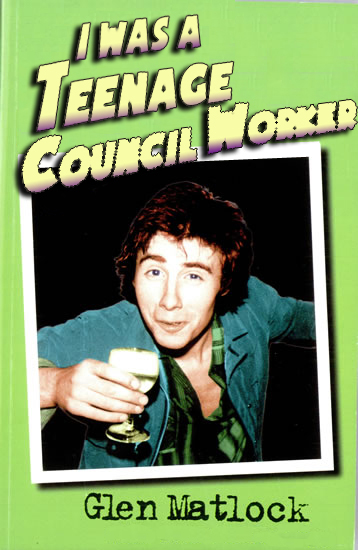
That’s one pistol, here’s another. Later that year, one of my jobs was maintaining the flower beds outside Maida Vale library where I’d sometimes see the original pistol’s bassist Glen Matlock wandering past. At a gig at ULU by Boys Wonder (who were trying to mould themselves on the early pistols at the time) I was introduced to him and he seemed a down to earth guy.

A few months later, I bumped into Matlock again, having recently read an interview with him about the early days for some article about “10 years of Punk”.  Being at the time, one who took things a little too serious, I though celebrating “10 years of Punk” was a load of old rubbish, as wasn’t Punk originally supposed to be against nostalgia?

I was walking down Shirland Road with my petrol mower on my way back to the shed for a cup of char at 3pm when I saw him. He didn’t initially recognise me from the ULU gig in my council gear but soon got talking. After a while I mentioned the 10 years of Punk article and got a bit steamed up (What do I know, in 1976 I was 14, wore patch-pocket baggies, had on spoon shoes and rode a racer with drop handlebars, not that punk eh?).

The situation must have looked ridiculous from where he was standing, a council worker in a donkey jacket with green twine around the waist holding it together (as the buttons had fallen off earlier that year) following him down the road pushing a lawn mower ranting about Punk. He made a swift exit into a nearby pub leaving me outside unable to follow him in with my mower and the pub’s “no overalls or work boots” rule. I do feel a prat now and I bet you he probably felt a bit shaky whenever he saw a council worker for a few months after. Not good…

Grants for gardening!

I’ve just received this off our good friend Bridget Virden who tells us about Capital Growth who are funding food growing in London (there’s got to be others schemes for around the UK).

Capital Growth Funding
Grants round launched to support community food-growing projects in London.

If you are planning to start a community food-growing space or want to expand an existing space and you are looking for money to buy soil, seeds, tools and other materials necessary, this is your opportunity to apply for some financial support!

For more information, including the application criteria, and to complete an application form please visit http://www.capitalgrowth.org/apply/

Grants are available from £150 up to £750.
Grants round deadline: 5pm, 7th November 2011

(No) Panic in the streets of Nunhead

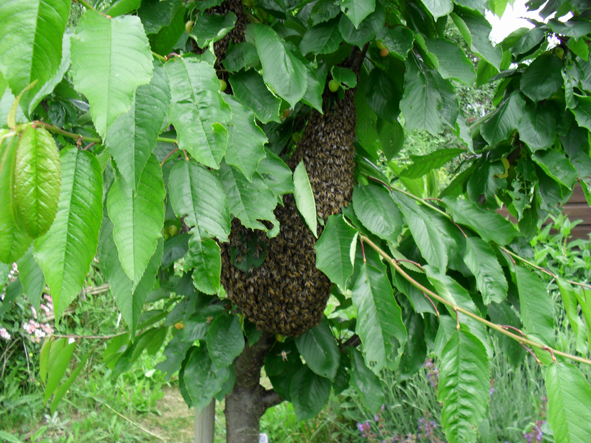
Thanks very much to Sharon Bassey from the London Beekeepers Association (LBKA) for this excellent photo of a bee swarm taken in Nunhead, South London and for the additional info.

“When bees swarm, they fill their stomachs with honey so they are more lethargic, and their sting is tucked up into their stomachs so are less likely to sting, unless they have been out in the elements for some time.”

A list of major bee foraging plants (there’s loads of minor ones) throughout the year.
April:

Plum & Damson, Cherry, Pear and Oil Seed Rape.
May:
Apple, Dandelion. Hawthorn, Sycamore and OSR.
June:
Blackberry, Field Bean, Raspberry. Sainfoin, OSR and Borage.
July:
Bell Heather, Blackberry, Lime, White Clover, Willowherb, OSR and Borage
August:
Bell Heather, Blackberry, Ling (Heather), Mustard, Red Clover and Willowherb.
Sept/Oct:
Ling and Mustard.

For more info about the LBKA go to http://www.lbka.org.uk/index.php