

If you remember, our friend and Downbeat on Shortwave collaborator Jesse Yuen (of RTMFM’s North of The River Swan) moved into a new house in Perth last year and is doing some major work on his front garden. His last post was here and we’ve got an update and it’s a great one!
“Okay, so this is the next chapter in what I’m calling “re-wilding” our front yard…”, over to you Jesse:
The house was built in 1963 and right up to that point, our property was just undeveloped bushland. In the ’50s and ’60s the urban sprawl in Perth started to spread through our suburb and giant bush blocks owned by rich people were divided up into smaller lots and sold off as private properties. At the same time the government built road infrastructure through the area and our house was one of the first built on the street. We bought the house from the family who built it, who had raised a couple of generations of kids in it so when we moved in, it still felt very much like theirs.

We purposely let the front yard die, didn’t water the lawn for a year, ripped up the non-local vegetation and essentially completely neglected it. People walking past must have thought we were crackheads, because it was looking very rough by the end. The goal was to remove the effort of clearing it by hand, let it die naturally and create a sustainable garden that probably was similar to what would’ve been growing there 100 years ago.

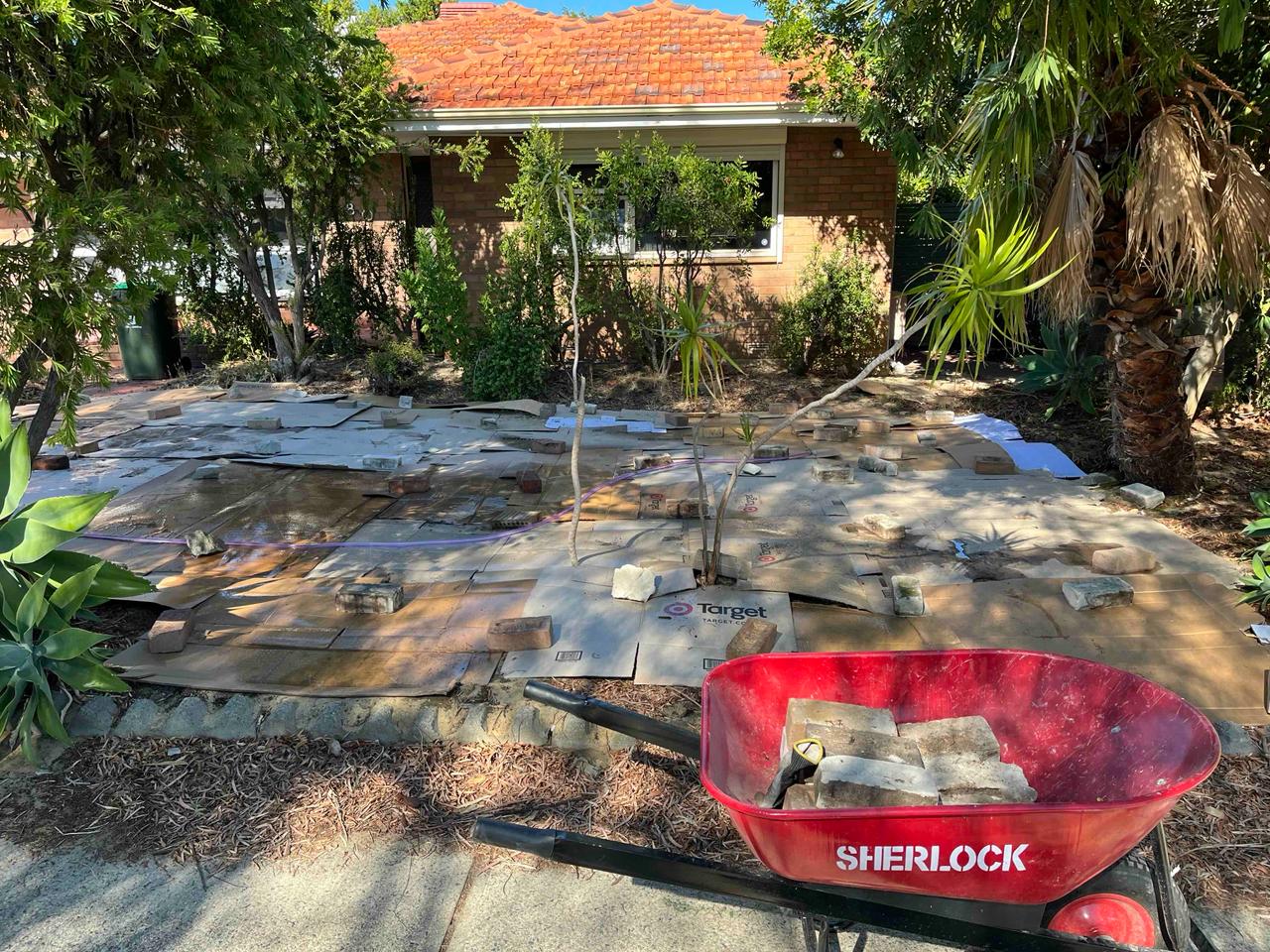
We adopted a technique we’ve heard about called “smothering”, essentially covering the entire area in cardboard, watering it in so it moulded to the present topography and then laying a heavy amount of mulch on top. The weeds and the things we didn’t want would be starved of sunlight and oxygen so not being able to photosynthesise and die without needing any pesticides or laborious weeding.

We progressively laid cardboard over the entire garden and weighed it down with bricks then watered it all in, making it mushy and soft and moulding itself into the ground. I’ve been saving up cardboard for the last year, luckily moving house means you have a lot of the stuff on hand. It was great to use all our own cardboard rather than buy it and we also had some concrete around the house from renovations and stuff too. I salvaged a bunch of slabs from the back yard and made a cute little path through the front of the garden.
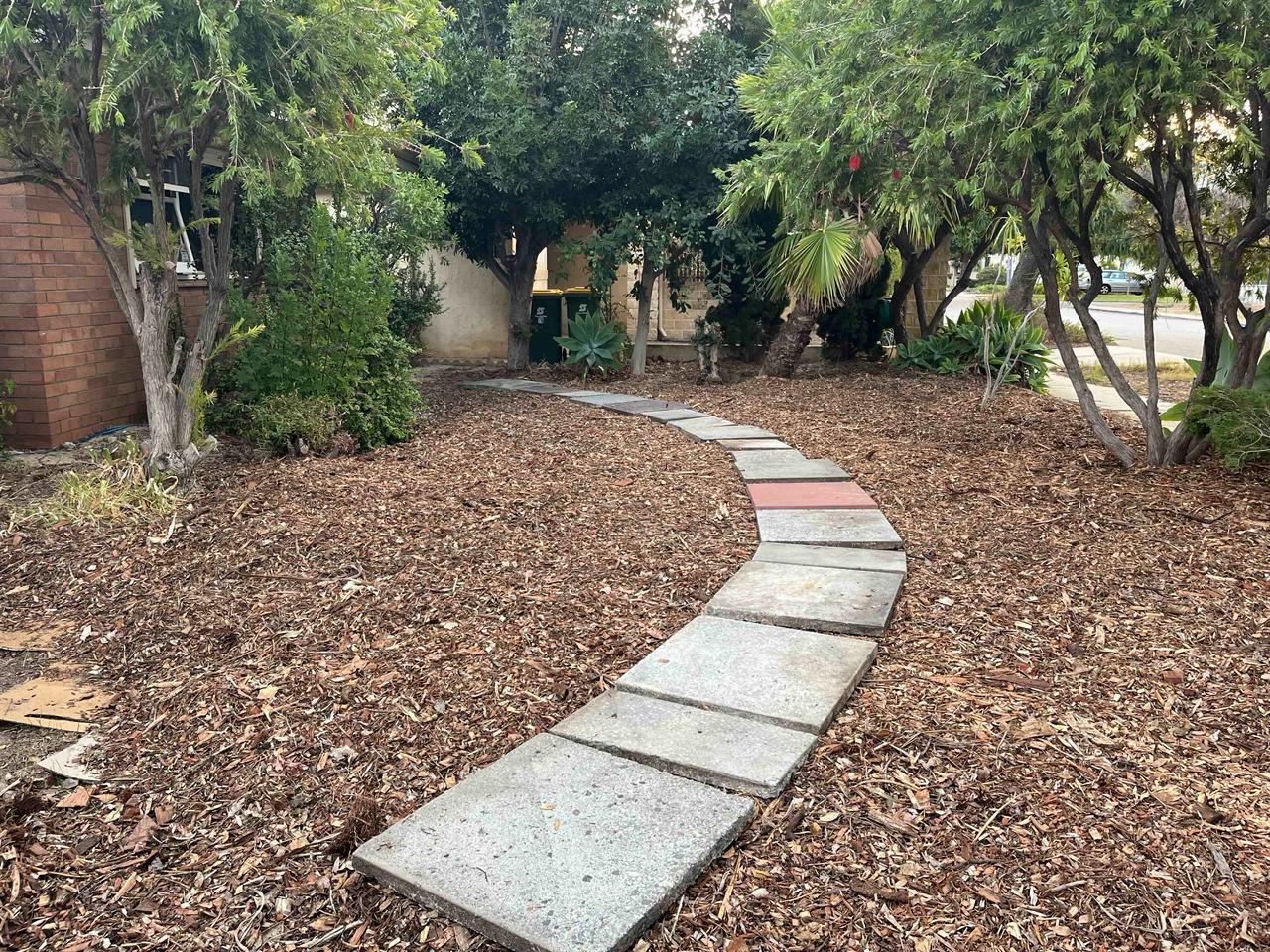
I was incredibly disheartened to find that within weeks, local weeds had figured out how to grow through the cardboard through the mulch (below). The primary villain in this war of weeds Is this one: Oxalis pes-caprae, commonly known as African wood-sorrel, Bermuda buttercup, Bermuda sorrel, buttercup oxalis, Cape sorrel, English weed, goat’s-foot, sourgrass, soursob or soursop.

Kids growing up in the ’80s and ’90s in Perth called it sour grass and we would eat the stems and the flowers for snacks, even though it is incredibly sour as the name suggests. Without a doubt if you were seen picking it, a kid would tell you that a dog probably had peed on that patch of sour grass but you’d probably ate it anyway. This weed comes from a bulb buried deep underground and I must’ve left tons of it buried in the soil because it’s everywhere now.
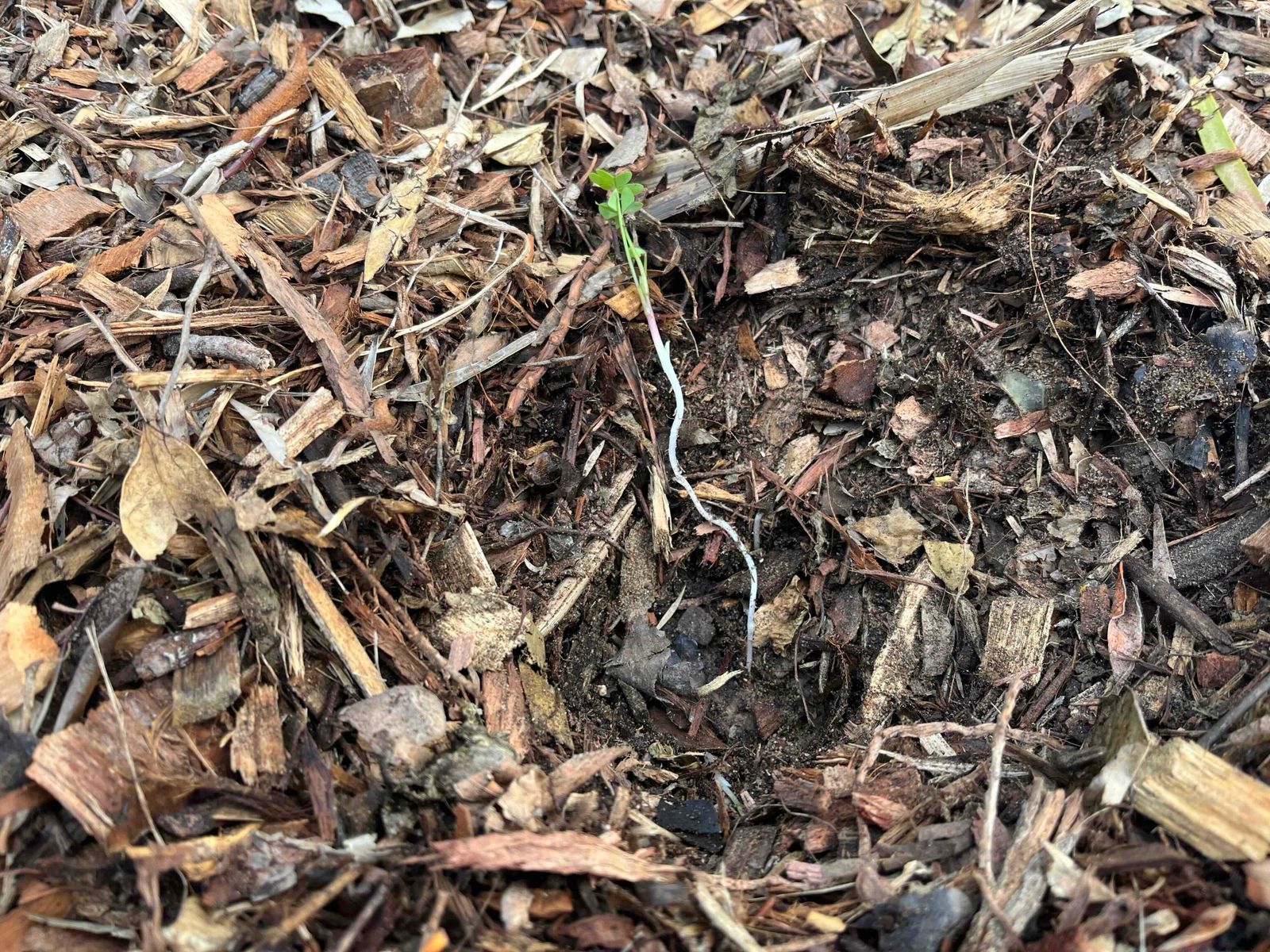
You can see how long its stem is (above), it’s probably extended itself maybe 20 cm to burst through the cardboard and the mulch to find the sunlight. Really impressive, life will find a way right? They have come up everywhere in the garden and I’m experimenting with pouring boiling water over it all because I refuse to use any chemical chemicals to kill the weeds.
By the way, these last couple of days was heavily soundtrack by this tender, contemporary jungle album by Coco Bryce.
Cheers Jesse for sharing your story and pictures, we really appreciate it and look forward to the next part which he says is a cracker. “There are some nice plants coming along in the yard and some of them are getting a lot of commentary from the neighbours as they walked past which is great too.”
 Weeds up to me knees