Marquee Moon

A few weeks ago I was looking through a bookshop in the west end to spend a tenner’s worth of book vouchers I got for christmas and came across a very interesting book about gardening by the phases of the Moon. Now this is real bonkers but bonkers that has been used by our gardening ancestors for years and bonkers that works!

I knew nothing about the subject and as the book was over the tenner mark I bought Peter Hook’s “The Hacienda: How not to run a club” instead which was okay, full of mad stories but no suprises and certainly not a book you’d want to pick up and re-read. I now wish I added the extra few pounds and bought the other one as it seemed a bit out there but very interesting.

How mad was it when I found out the other day Scarlett Cannon from the great courses at Walworth Garden Farm wrote a piece about it in her regular I-grow section for I-D last month and has been using the method for four years.

http://i-donline.com/2012/01/i-grow-biodynamic-magic/

I am now “taking steps” (no pun intended Sting) to find out more…

Book of the week

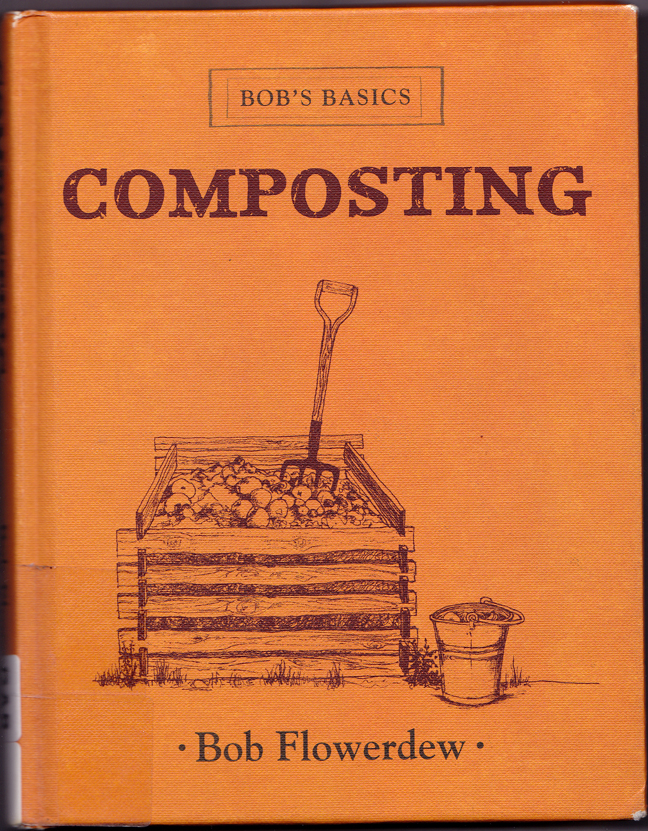
Bob’s Basic’s: Composting by Bob Flowerdew
(Kyle Cathie Limited) 2010

This a good little book about the art of composting from the great Bob Flowerdew, he of the Rob Da Bank ponytail and recycler of old fridges as mini-greenhouses fame. This was obtained from the local library but I reckon it’s well worth shelling out the nine pounds ninety nine for (probably cheaper as it’s a couple of years old now).

It’s easy to read and stuffed full of hints and tips with humour making it a great reference book. The main themes running throughout the book are that even the worst heap can be corrected and once you start making compost and use it, you won’t be able to get enough of it!

It covers the whole range of garden composting from the history of it, different designs of bin, what you can and can’t use, how to correct a bad heap and even covers wormeries, snaileries and chickens! There’s lots of things that I didn’t realise that you could do like using ditchwater to boost the heap and soaking weeds in dirty water for a few weeks to start them rotting down plus a great tip of always adding a thin layer of soil over the layer of new waste you put in to help it on it’s way.

And finally, my favourite quote in the book is “sadly, composting human dung currently puts you in the ‘too eccentric to be a nice neighbour’ camp”. And I thought adding urine from a bottle was considered a bit bonkers!

State of the nation

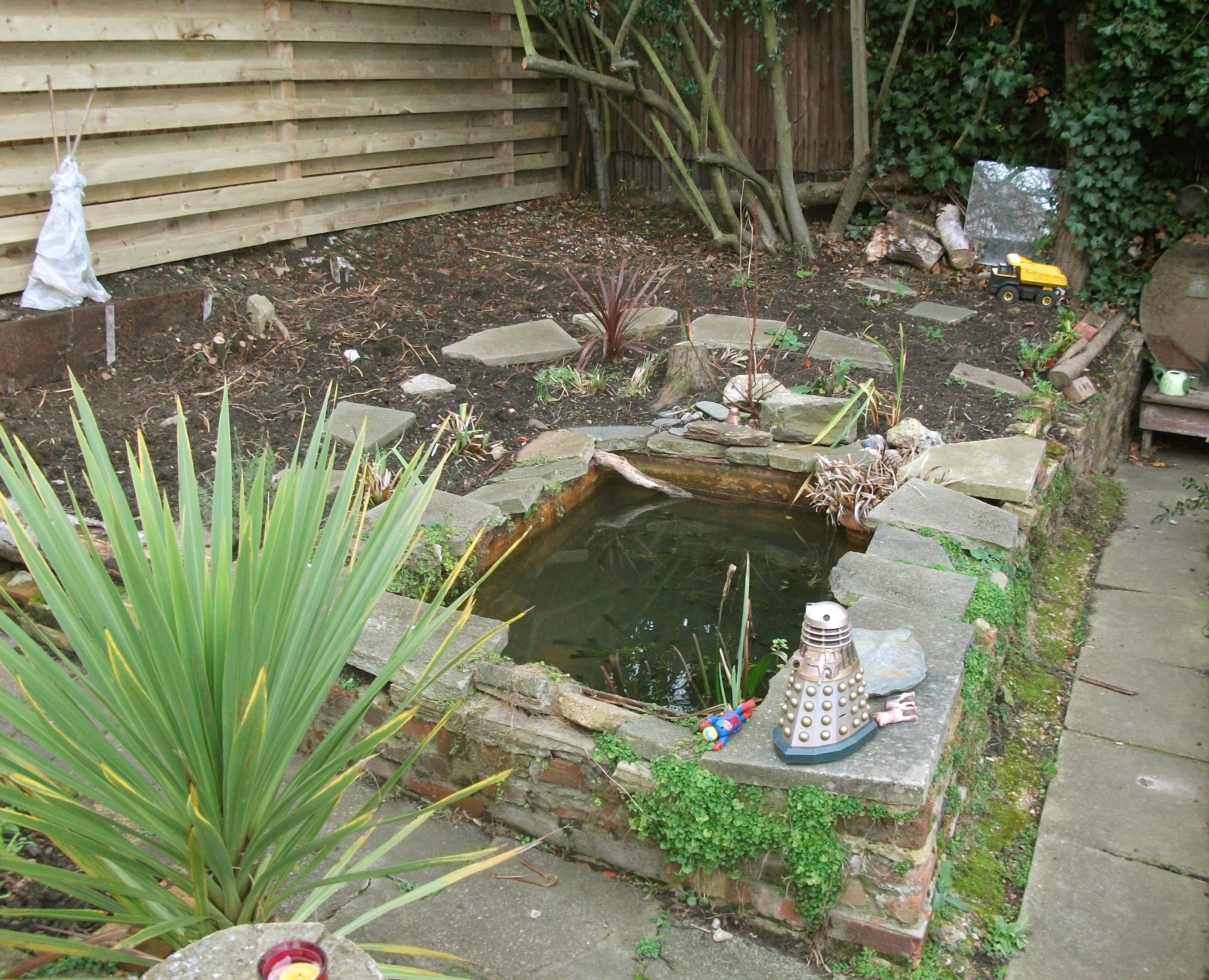
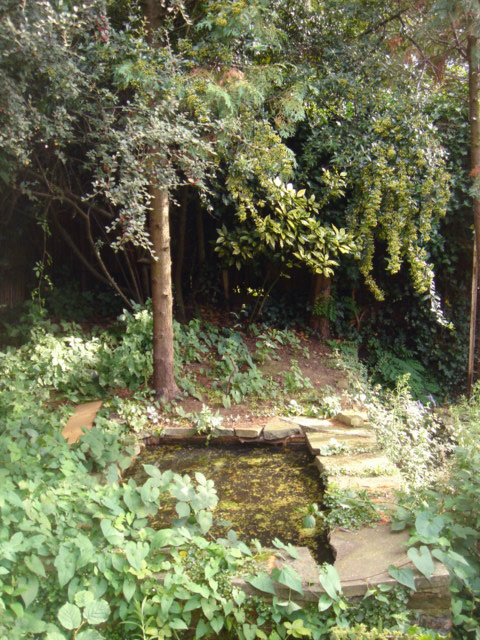
Here’s another pic from the ”five years on” series and as you can see it’s a garden pond with a path around it (and a new fence that needs some protection!).

Five years ago when we moved in it weren’t so clear, we couldn’t even walk down the garden because of the undergrowth so it came as a shock to find that we even had a pond. It was full of dirty water, the result of ten years of debris and as stagnant as anything, the soil surrounding it was grey and compacted with lots of ground elder, bindweed and a large pyracantha gone crazy.

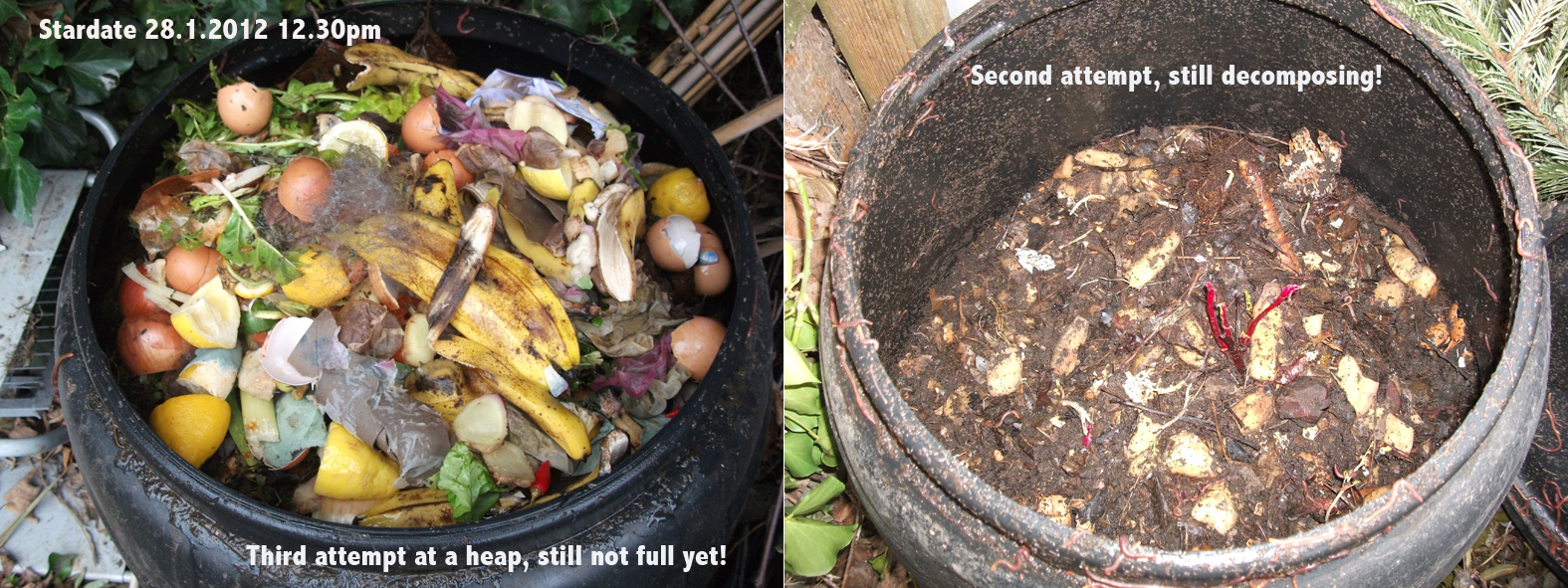
Before clearing, we had to chop down a couple of very tall self-seeded conifers with help of a mate (thanks Marc!) and rather than waste the wood we used it to put around the flower beds. When I first cleared the area I just threw a lot of woody stuff on the compost heap in desperation hence the first heap full of material that hasn’t rotted down and now needs to be burnt. A lesson well learnt!

It took me a whole saturday afternoon in the late autumn to clear out the pond and a couple of baths to get rid of the stench of ten years worth of decomposing debris. When I finished, I stuck a taurpaulin over it so it would stay dry as I was going to fill it in a couple of weeks later. Weeks turned into Months and it was only when I was showing some friends of ours around in the spring (hi Chris and Anu!) they lifted up the taurpaulin and said had we put this over the pond to keep the tadpoles warm. What tadpoles? The pond had filled itself up again (god knows how as it’s a submerged metal tank!) and was teeming with wildlife. There was no way I could filled that in with all that going on, hence the decision of keeping the pond.


Herbsman shuffle

This morning I found out reggae legend King Stitt passed away the other day. He died from prostate cancer and was only in his early 70’s. Just a couple of weeks ago I was chatting to someone in Dub Vendor about the musical pioneer (he was one of the first DJs to be captured onto vinyl in Jamaica). Stitt’s attitude was classic reggae, where an artist would capitalise on whatever qualities they’ve got, no matter how unusual or obscure. He didn’t have Steve McQueen type looks but that didn’t stop him, he gave himself the nickname of “The ugly one” and the rest is history.

Stitt was a big hero of mine since the early 70’s when I saw the lyrics of his tune “Fire Corner” on the cover of my elder brother’s rough book; “No matter what the people say, these sounds lead the way, it’s the order of the day from your boss DJ, I King Stitt” Brilliant! Throughout the years I would be well chuffed if I came across any of his releases in second-hand shops and when it came to sample something for me and my mate’s first single it seemed King Stitt was a natural choice. When our track “Son of Stitt” by One Deck & Popular was released, I sent a 10” to Studio 1 in Jamaica where he worked with a note saying if he was ever in Camberwell Green and fancied recording a single to get in touch. He never did but it would be nice to think he actually read it. The last few years had seen King Stitt still in demand what with the ever growing interest in vintage reggae and at the end of last year doing gigs in France and Brazil to great acclaim.

I feel sad tonight of his passing and will drink a couple of mini-bottles of Sainsbury’s own brand lager to salute his passing. Big up the King!


There’s a sting in our tail

Thanks very much again to Sharon Bassey of the London Beekeepers Association (LBKA) who’s been in touch with us on a regular basis and for recently letting us know that the capital growth fund is releasing more grants of up to £750 for community food growing projects, see http://www.capitalgrowth.org for more info.

The LBKA will be running their “Introduction to beekeeping” two day weekend course at St Paul’s Church Hall in SW4 in a couple of months time and after that they run a mentoring scheme where you are assigned to a local beekeeper for a year before going it alone. A great organisation running excellent and informative courses. The cost of the forthcoming one is at the great price of £150 which is not bad at all!

For more information: http://www.lbka.org.uk/index.php?page=Courses

Pic: The Worker Bee from Enlightened Cushions
info@enlightenedcushions.co.uk

folksy.com/shops/enlightenedcushions
Photography: http://www.carriejeffreysphotography.co.uk

Compost heap, compost heap, compost heap

This morning they were filming next door in the newly built flats for some “Location, location, location” TV spin-off called “Secret location”. Yesterday it turns out they didn’t have any electricity, so they offered us £75 for using ours. I really could do with the brass, but have you seen those lights they use for filming? I can just about afford the leccy at home as it is without the added extra of a film crew, hangers on, catering team, mobile nail bar, P.A’s and stylists etc.

When the programme appears on the telly in a couple of months time If you look hard enough out of the back window into the next door garden you might see a bloke taking photo’s of his compost heap, that’s me that is!

Don’t fear the reaper

The early reaches of the growing season are now with us (well for impatient so and so’s like myself they are). Growing from seed is easy and cheap, and as the soil outside won’t warm up until later on in the spring I’ve started off some veg and herbs off in trays on my kitchen windowsill.

Most of the seeds for this forthcoming year were obtained on the cheap from E-bay, “end of season” bargains from a DIY shop, free gifts with gardening magazines bought cheaply from the market and swaps from mates but I did make an exception and bought some full-price seeds from the garden centre around the corner alongside some seed compost to keep them in business. Local garden centres are great and brilliant for advice and the staff will get to know what you like so will point you in the right direction when it comes to new varieties and offers etc so you wouldn’t want to see them disappear.

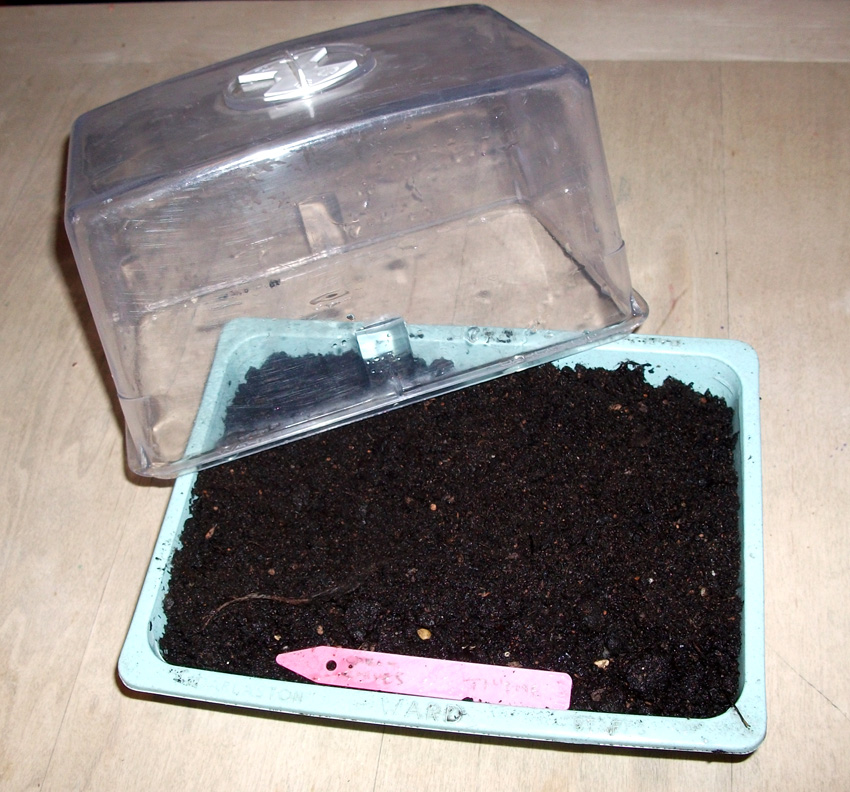
Last night I started off some garlic chives and thyme in a posh seed tray (with a plastic propagator lid) which was given to me by a neighbour who was clearing out his loft but you could use plastic plant pots, old yoghurt tubs with some drainage holes in the bottom or cardboard egg trays just to start off with.

I gave the tray a good clean and rinse out to prevent disease, then filled it with seed compost (which is low in nutrients and has added sand to improve aeration) and firmed it down with my hand. It then got a good soak first of tap water from a spray bottle (which avoids disturbing the seed later) and I let it drain off in the sink to get rid of the excess liquid.

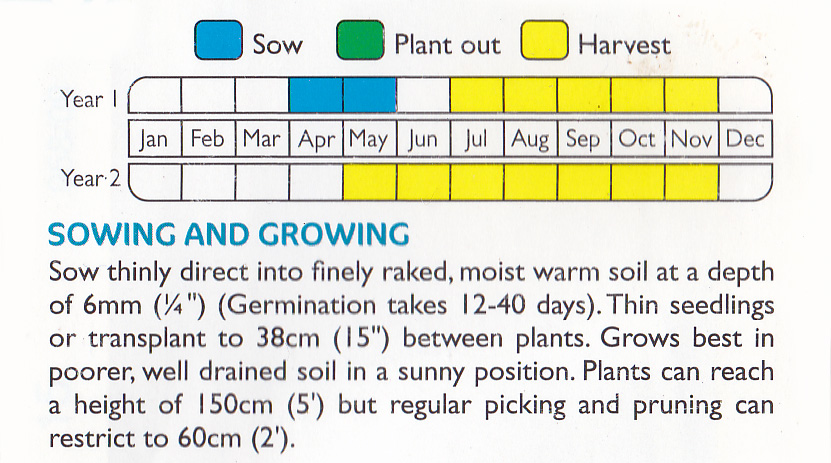
On the back of the seed packet you will find detailed information with ideal sowing date, depth and and position of sowing and I always try to sow the seed thinly as not to waste them and it’ll also give the seedlings space to grow without competition and as a rule, planting depth is about twice the size of the seed.

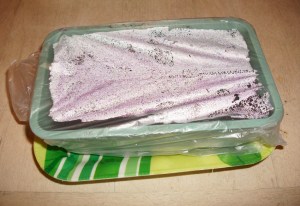
After sprinkling on the seed and covering it with the right amount of compost, I stuck the name of the plants and the date in pencil on a plant label on its side then covered it with the posh plastic lid. You could use cling-film or a sheet of glass over the top which you’ll take off when the seedlings start to show. A couple of days ago I started off some tomatoes and sweet peas in small plastic seed tray with a plastic sandwich bag over the top (below) which works too. The secret is to keep the compost just moist and not too wet. There, I told you it was easy!

You’ve been chitting on me

The other week I couldn’t stop myself and popped into the garden centre and got myself a bag of Desiree seed potatoes. They cost us £3.99 for about 40 which isn’t bad, as you’re talking 40 plants that will give you a good few spuds on each come harvest time in September, well worth it!

The first thing I’ll be doing is encouraging the seeds to sprout or “chitting” them, which will give them a head-start before planting them outside. We’re not talking the long pale shoots that you see when potatoes have sprouted after being stored in the dark, but ones that are short and sturdy. It’s worth chitting spuds before planting as their shoots usually appear in the ground a couple of weeks before seed spuds that haven’t.

All you basically do is stand the seed potato’s upright in a container (a seed tray or a cardboard egg box) with the blunt end of the tuber upwards (the end that has the “eyes”). Make sure the container is in a cool position with natural light and where’s there’s no risk of frost. I’ve stuck mine on the floor in the back room by the patio doors. Fingers crossed I don’t stand on them when I’m half asleep doing me tai-chi in the morning!

There is such a thing as a free lunch!

Yesterday I attended the “worm composting in the city” course at Walworth garden farm in SE17 as part of their introduction to gardening classes. They are free but if you have attended one before in the same year you have to pay a small charge. It was a tenner for this one, a small price to pay for a great day.

In the morning we went through making garden compost something that has been occupying me for the last few weeks, looking at how the process works and the best ways to do it and a visit to a couple of heaps they have on site (one which was “how not to do a heap” which reminded me of my first attempt!) After lunch we looked more into worm composting, something I hadn’t a clue about before going on the course. You can buy a wormery on the internet for about £65 but we looked at ways you could do it for much much cheaper! At the end of the process you get excellent worm compost and a liquid you can feed to your plants, brilliant! Give it a few weeks and I’ll be making one.

Like the last one I attended, it was very friendly, fun, informative to say the least and well enjoyable. We all should make more of what’s on offer at places like the Walworth garden farm. Tap in “free gardening courses” into google and see if there’s a course near you.

Thanks to Scarlett for the great day!

For more info about the courses on offer at Walworth garden farm: http://www.walworthgardenfarm.org.uk/projects

The real wild house (and garden)

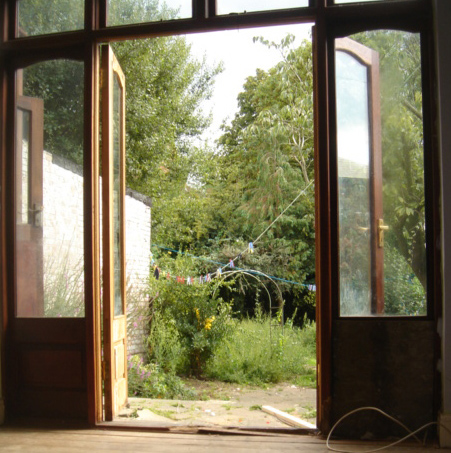
Nearly five years ago we moved into this house that needed so much work even a hardened DIYer would have wept. As a non-hardened DIYer I constantly wept. When you opened up the back doors onto the garden the top picture is what we were greeted with upon arrival. If you look closely in the bottom right panel on the patio door you can see the boarded over remains of the “rockweiller flap” aka a booted-through door.

On the first night we were sitting outside having a drink in the garden wondering if we had done the right thing (I still wonder sometimes) and had to come in after ten minutes what with all the weird rustling in the dense undergrowth.

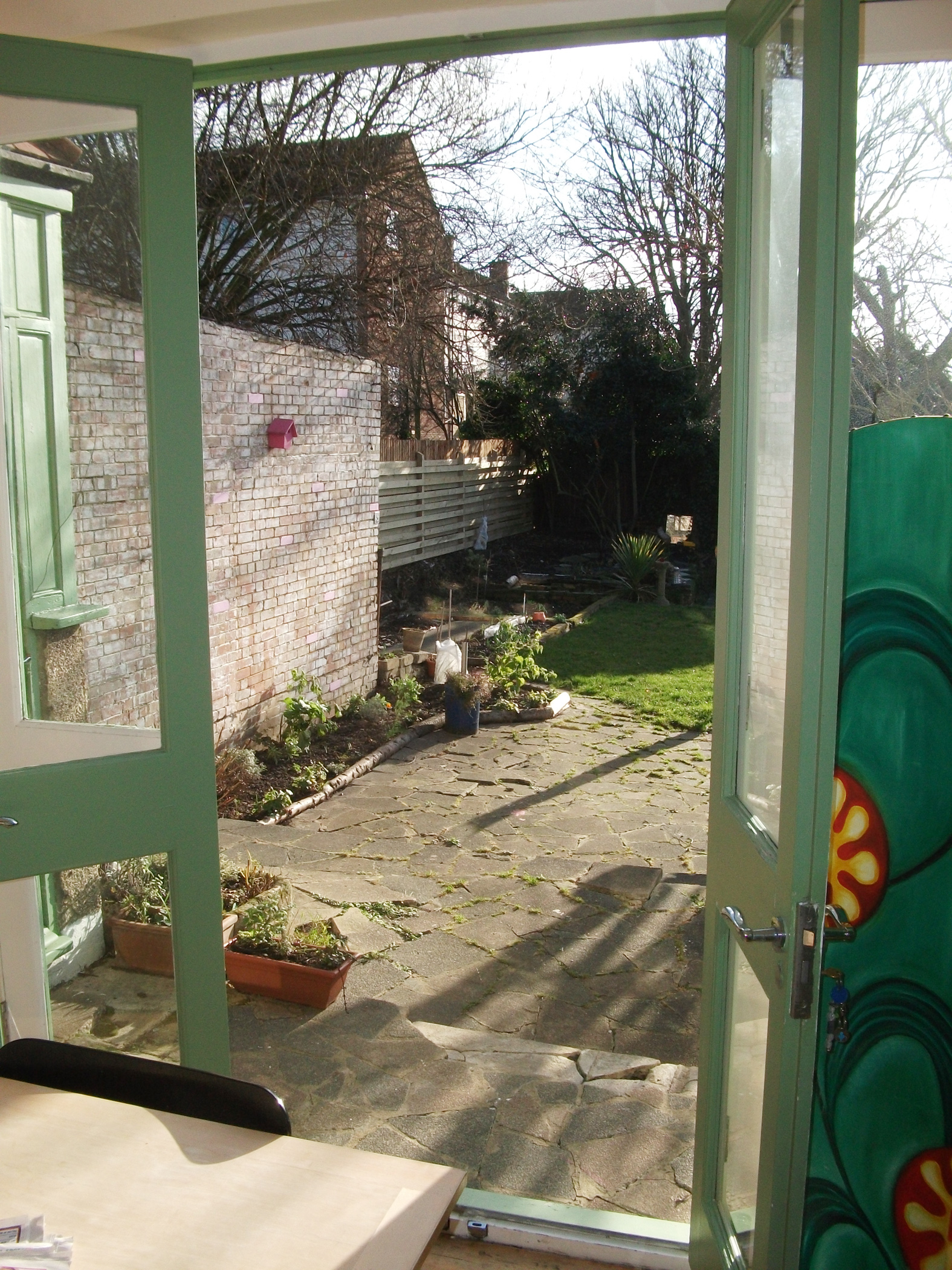
The photo below is the same view four and a half years later (in mid-winter) and the garden is now cleared of mummified underpants and kid’s bikes and now is a blank canvas to work on. This is a work in progress and work that’s got be be done on little or no budget and this is what this blog is about!