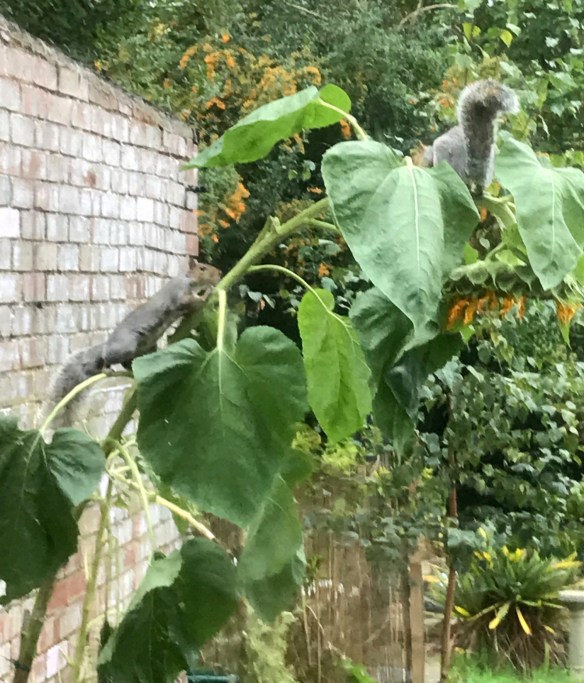
Double whammy! Within half an hour after the Parakeet cheek we’ve got two squirrels on the Sunflower making a co-ordinated attack. That SE23 nature grapevine must be buzzing this morning!

Double whammy! Within half an hour after the Parakeet cheek we’ve got two squirrels on the Sunflower making a co-ordinated attack. That SE23 nature grapevine must be buzzing this morning!
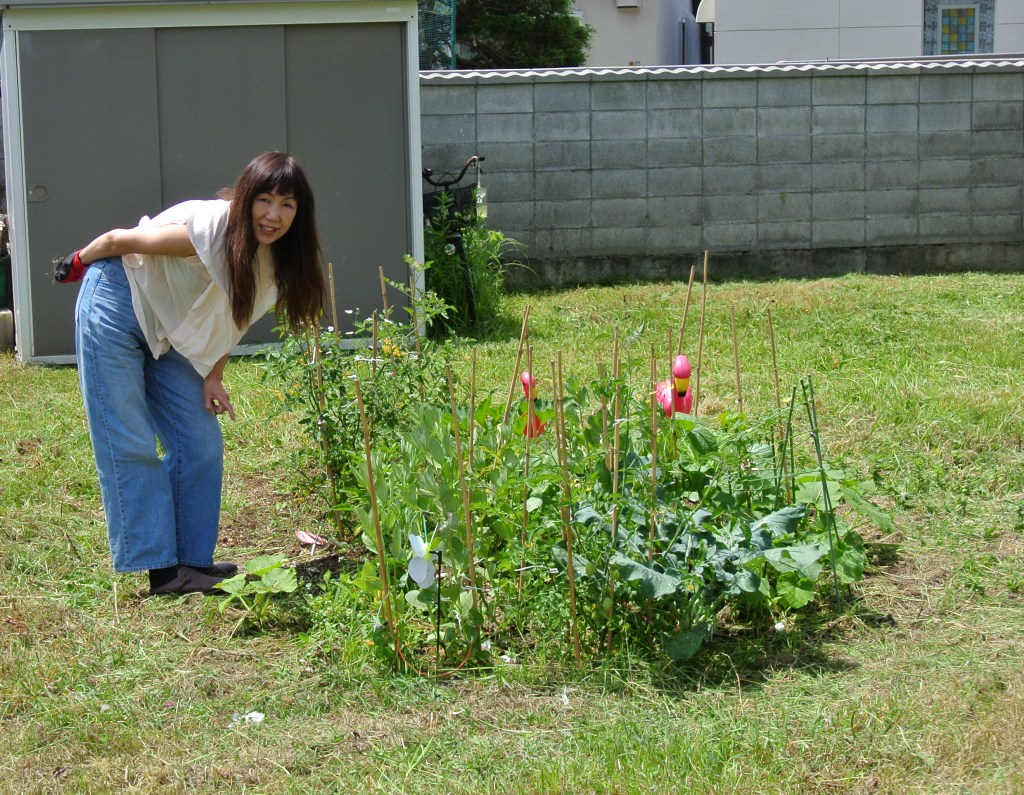
A big thanks to Stevyn and Yukako Prothero for sending us pictures of their first journey into the world of gardening in Hokkaido, Japan. We know Stevyn from the excellent Iron Feather Journal fanzine (there’s loads about it here and here) and he was also behind the Towne Club Records Alan’s Psychedelic Breakfast remix project here which included a musical contribution from Madtone.

We at Weeds love a garden no matter its size or form and this is a neat little one. What makes it even better is that it’s the first time they’ve both had a go at growing stuff and in their own words with “little knowledge or experience.” That’s what’s gardening’s about, starting small, learning from any mistakes and see how you get on. You may get the odd failure but you’ll get successes too. Just being in the outdoors tinkering away with the many gardening jobs is healthy for a start and keeps your mind off the various lists and worries of the week.
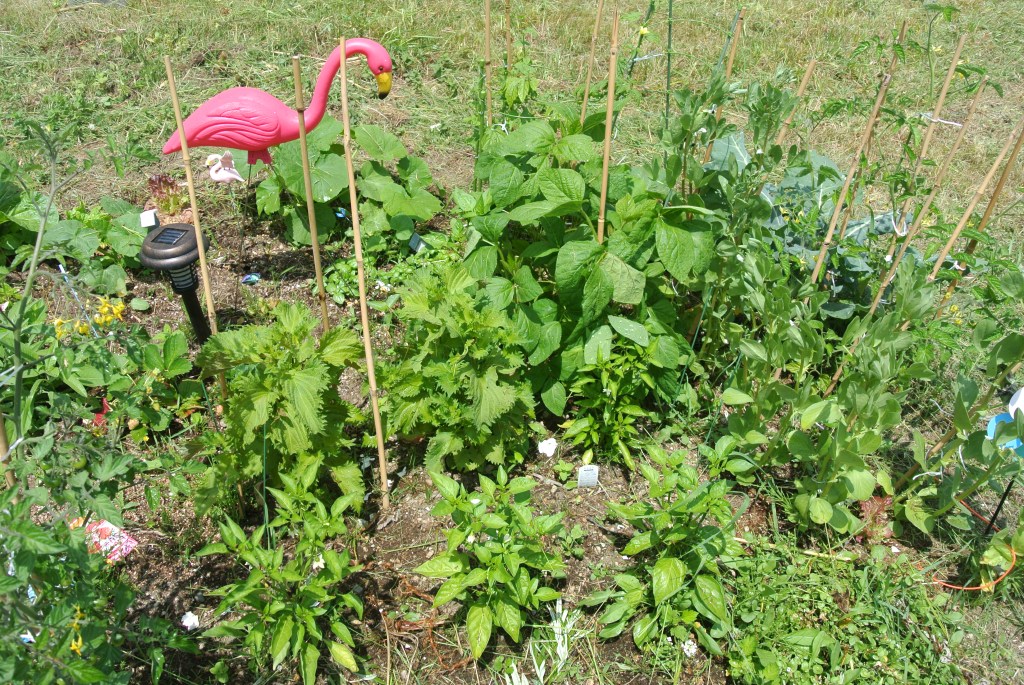
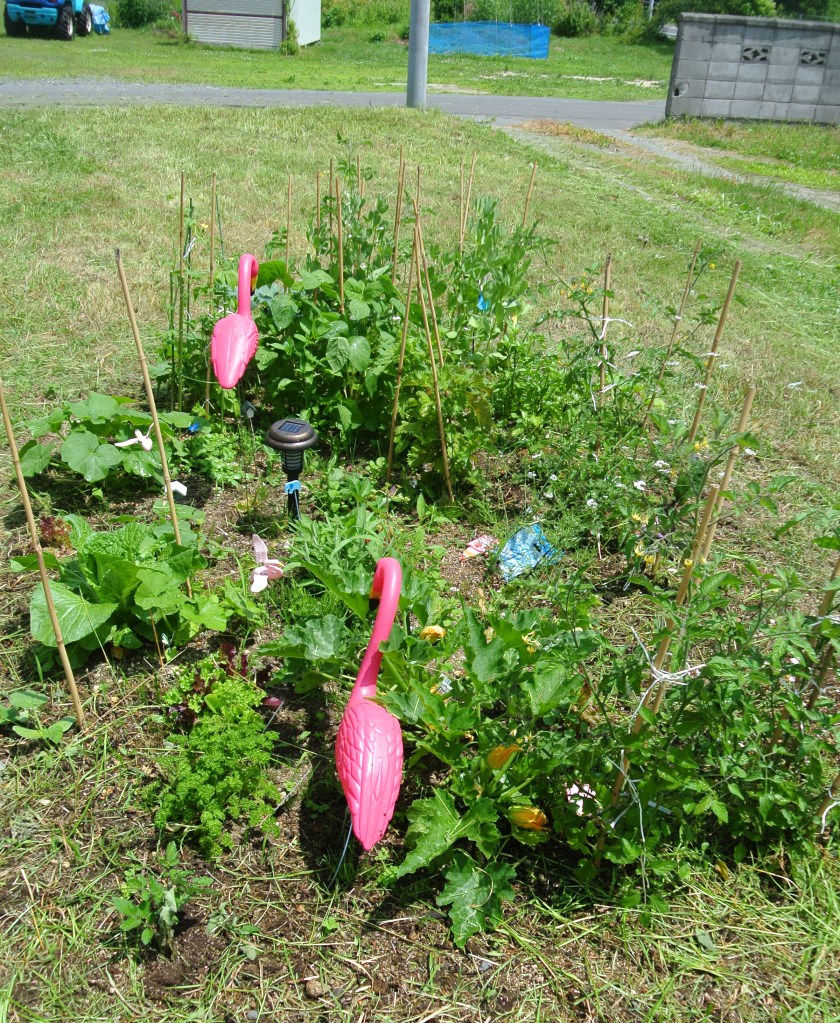
The plot is compact “the earth is very rich, it’s excellent soil and get lots of sunshine and rain” says Stevyn. There’s a great mix of stuff growing including tomatoes, beans, peppers, zuchini, eggplants, shiso, carrots, lettuce, pumpkins, asparagus and onions! It’s right up our street.
He told us that the American orange pumpkins are rare compared to the green Japanese pumpkin and also jalapeno peppers are scarce over there too and cost a fortune.
As always we ask our contributors to pick a tune and Stevyn chose this one, a cover of a song from “a very touching sweet tv show about a man and two kids who live in a shack in Hokkaido trying to survive called Kita no kuni kara (From the North Country)”.
Also Stevyn sent us a pic of a rice paddy near his house “Many miles of rice paddys here, as the people eat rice daily” and how great is that scenery?

Also whilst we’re on the subject of Japan and gardens have a look here at a great garden they visited last year in Tomakomai. Here’s a sneak preview. A fun garden indeed!

Thanks again to Stevyn and Yukako for sending the great pics and we’d love to see more photo’s later on in the year to see how things develop!
Big shout to Gerry Hectic for sending us a pic of his dustbin fruit container conversion job which he did last year. It’s coming on a treat at the moment, look at those strawberries turning red! That’s a great idea Gerry!

And (below) here’s a few random flower pics from the Weeds garden taken this morning.
If you’ve got pics ofyour garden do send them in! Email them to onedeckpete (at) gmail.com and also send us a tune if you fancy it as well!


It’s been a while since we’ve heard about our friend (and musical collaborator) Paul Greenstein‘s garden in Melbourne, Australia. He’s sent us over a few pics and news of what he’s up to now. For around a year he’s been keeping bees.
“We started with a ‘nucleus’ hive, which is a small box with 5 frames. We’ve now grown to 3 full-sized boxes (supers), although we’ve packed the bees down into 2 boxes for the winter. For the bees, it’s about staying warm. From the beekeeper’s perspective, you want to make it easy for them to stay nice and toasty, and not to have to worry about heating a lot of empty space. Kind of like downsizing your house to save on the bills, except they keep warm by vibrating their flight muscles while keeping their wings still. Amazing little creatures.
We haven’t harvested any honey this time around, preferring to let the bees keep it for food during winter, building up a strong hive. We live very near a creek (basically a river, but not a very big one) – and there’s loads of stuff for bees to forage. Lots of Eucalypt trees, although there’s a particular type of Eucalypt called Stringybark or Messmate, which for some reason makes bees angry. Maybe they don’t like the way it smells. Hopefully they’ll avoid those and we won’t get stung by grumpy foragers…”

He also mentioned the subject of the last but one post about cicadas from Justin Patrick Moore:
“We get incredibly loud cicadas here – in fact they’ve been known to drown out conversation! Apparently the version we have here are called Greengrocer Cicadas, and can go up to 120 dB – louder than an ACDC gig. Our cats occasionally get fed up and swat them with a paw – they’ll go silent in shock for a few seconds, then start up again.”
Below is a pic of a Bramley apple that he’s put in as “You can’t get decent cooking apples over here!” We do like a cooking apple here especially in a crumble with custard! Do have a look at older posts about his garden here here and here.

And here’s a couple from Paul’s musical output, a lovely garden related tune called “Rose” that has a lovely ambient feel to it and one with a Jah Wobble type vibe called “White Blinds“, excellent stuff indeed!
As it says on his soundcloud “Sometimes inwards is the only way to go.” He and the bees are 100% correct! Cheers for the pictures Paul and keep us updated with how things are getting on!

Here’s a post from our good radio, gardening and music friend across the pond Justin Patrick Moore about some bugs that are about in his back yard in Cincinnati at the moment. We’ve never even heard of them over here!
The seventeen year cicadas are at it again. This generation of periodical cicadas has been dubbed Brood X. The periodical cicadas have the latin name of Magicicada septendecim, and have a really interesting life cycle. In southwestern Ohio they are of the kind that come out every seventeen years. These insects spend around 99.5% of their long life underground as nymphs, feeding on fluids from tree roots in the eastern United States. In the spring of their 17th year the mature cicada emerges between late April and early June at a given locality, depending on temperature, and when they come out, they are usually in huge numbers. They’ve been creeping out of the ground slowly the past few weeks, but this past Saturday was the first day I saw a bunch of them. The temperature of the soil has to reach a certain temperature before they really start coming out of the ground, making little holes that they then emerge from. The soil has to get about 17.9 °C (64 °F) before they are ready to get busy with each other propagating a new brood which is what they will spend the next four to six weeks doing. To attract a mate the males of the species have to make a long sonorous drone, that gets louder in the neighborhood as more and more cicadas come out of the ground and start flying and flitting about. Mostly they like to hang out on trees. Apparently in the eastern U.S. where these little buggers live, billions are going to emerge. That’s a lot of cicadas.
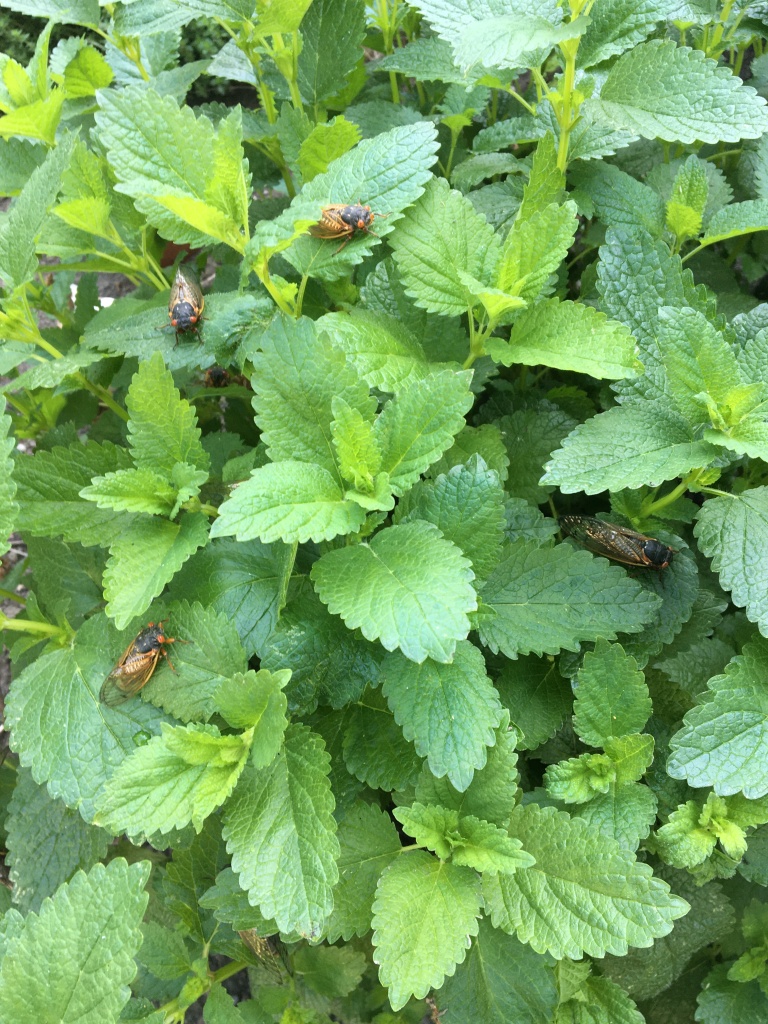
This is the third time in my life that I’ve seen the cicada’s. The first time was when I was a kid in 1987. Unfortunately as a kid I was rather cruel to these little things. Hopefully I’ve already worked off the karma I generated by being mean to bugs. (Be nice to the cicadas as they don’t hurt nobody and help aerate the soil!) The next time was in 2004 and I made a recording of them to use in the drone & experimental ambient music I am so fond of. I still have the recording but don’t know if I ever actually made a track with the sounds. That first time around too, there was a local pizzeria called Snappy Tomato Pizza. They made a jingle for Snappy Cicada Pizza that has stuck in my head ever since I heard it. They had a promotion that if anyone came in and ate a cicada they’d get a free pizza. Apparently they also had them to use as a pizza topping – but I think that was just part of their marketing ploy that has now become local folklore. Hear the jingle here.
Here is some cicada music: https://benseretan.bandcamp.com/album/cicada-waves
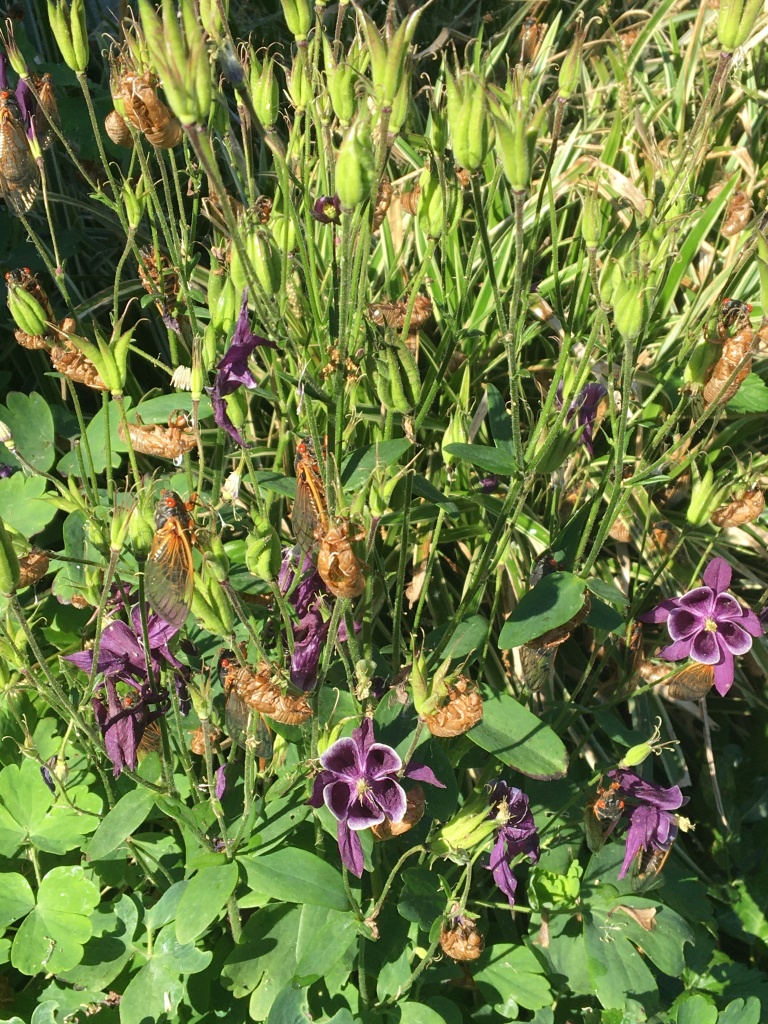
According to a story I saw on NPR some of these cicadas are going to go into a sexual hyperdrive caused by a fungus that is similar to ones found in psychedelic mushrooms. It’s a trippy time of year over here!
From: https://www.npr.org/2021/05/18/997998920/the-fungus-thats-making-cicadas-sex-crazy ( It’s so weird!)
“Kasson, who has been studying Massospora for about five years, says just before the cicadas rise from the ground, the spores of the fungus start to infect the bug. Once it’s above ground and starts to shed its skin to become an adult, its butt falls off.
Then a “white plug of fungus” starts to grow in its place.
A “white plug of fungus” seen in cicadas infected by Massospora.
Matt Kasson
“It looks as if the backside of the cicada is being replaced either by chalk or by like one of those nubby middle school erasers,” Kasson says.
The insects have no idea what’s happening. The fungus, however, is “pulling the strings” and making the cicadas want to mate with everyone.
Males that are infected will continue to mate with females, but they’ll also pretend to be females so they can spread the fungus to even more partners.
“It’s sexually transmissible,” Kasson tells NPR. “It’s a failed mating attempt, of course, because there’s no genitalia back there.”
The fungus causes different reactions in different types of cicadas. Periodical cicadas, which take more than a decade between appearances, get sex crazy from cathinone. In yearly cicadas, the fungus makes them instead become hypersexual from psilocybin — the same chemical found in psychedelic mushrooms.
Kasson estimates Massospora probably infects fewer than 5% of cicadas. And as far as he knows, the bugs are not in any pain.
“Everybody’s having a good time while they’re infected,” he says. “So I don’t imagine there’s much pain — maybe a desire to listen to the Grateful Dead or something like that, but no pain.”

Thanks very much Justin for the interesting piece and he also mentions to have a look at a blog post from a nature sound recordist in Ohio about the sounds the Cicadas make… and there’s lots of pictures. Have a look and listen here.
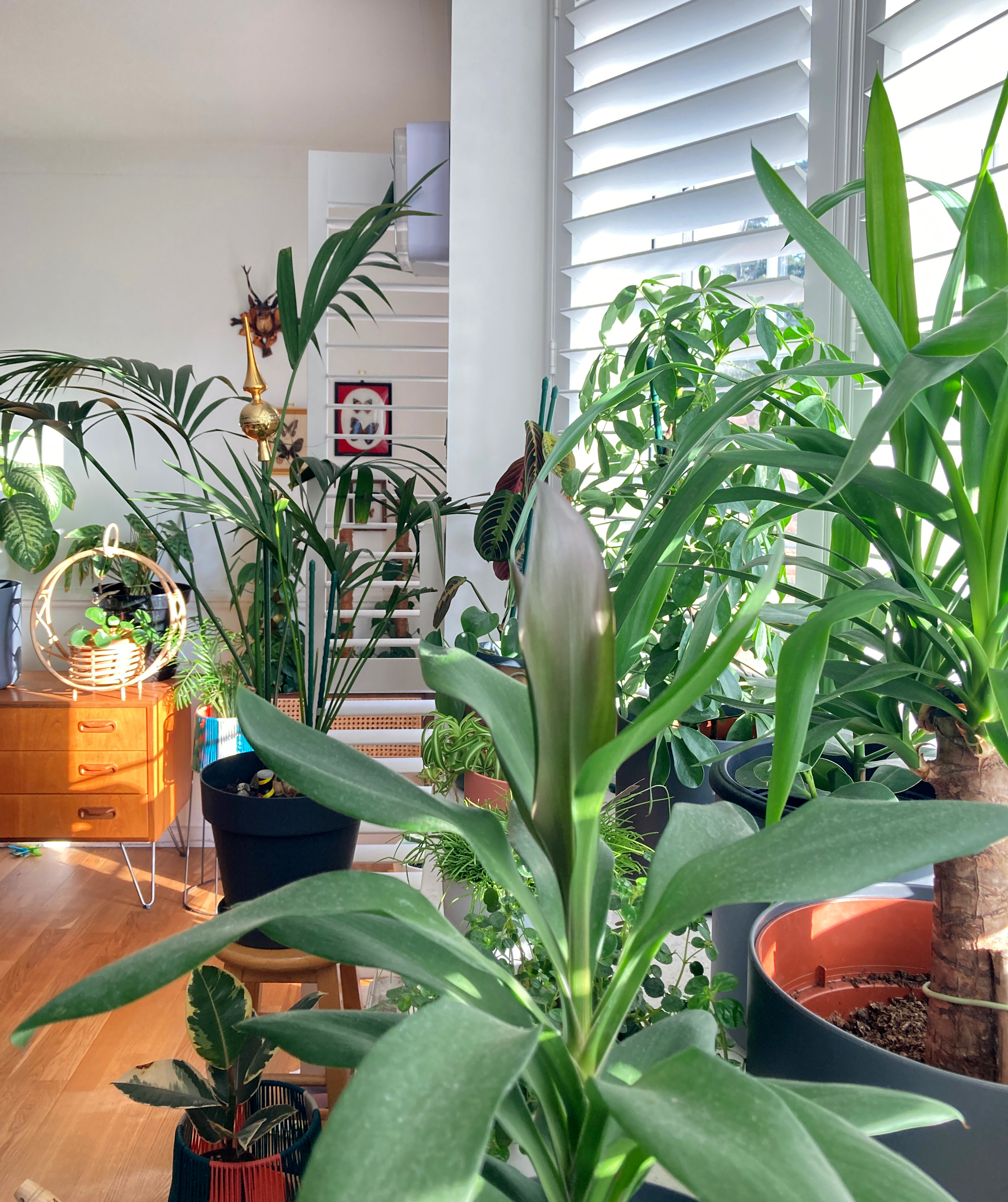
A big shout to Jesse Yuen who presents the excellent RTM.FM show North of the River Swan that specialises in downtempo dub and low end business on the second Sunday of the month from 4-6pm. Thanks to Jesse for sending us some pics (Thanks to Dee for taking them) of his great looking indoor planting scheme. The space is so bright and alive!
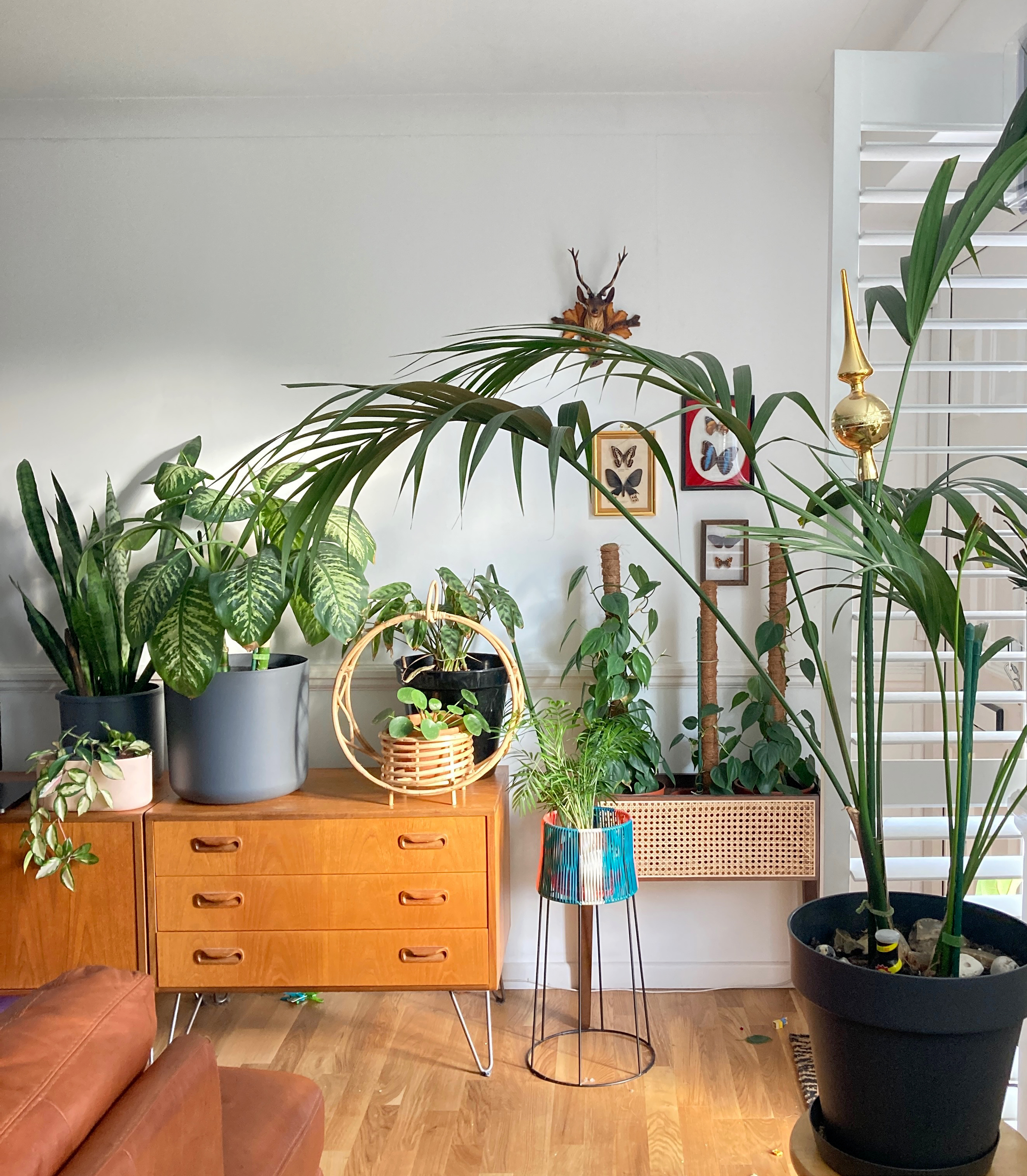 There’s a good variety of plants here even though us at Weeds are not the best when it comes to looking after plants of the indoor variety (we tend to overwater them then forget about them we’re ashamed to say.) There’s all sorts here including Kentia Palm, Chinese money plant (sometimes known as the UFO plant!), Prayer Plant, Tropic Snow, Mother-in-law’s Tongue, Devils Ivy, Parlour Palm, Umbrella Tree, Yucca, Mistletoe cactus (that looks well interesting) and the well hardy Spider Plant. (By the way whilst we’re on the subject of houseplants we have to mention a podcast to start following if you love gardening of the great indoors. It’s Jane Perrone‘s On the Ledge available here.)

And Jesse sent some of his favourite tunes from the North of the River Swan record boxes below to get stuck into. We didn’t know a lot of this stuff and that is what’s good about this music lark, once you open up that can of worms it’s never ending. There’s a ton of excellent tunes played on the show too so peruse the show’s mixcloud site here.
And do listen to the last episode of the show from 2020 featuring Jesse and Dubplate Pearl as it’s excellent stuff and full of some cracking tunes! Includes Prince Fari, Yabby You, Tradition, the great Depthcharge from Keith Hudson (What a tune!), a dub of Play fool get wise by Johnny Clarke and lots more great music.
Thanks again Jesse for sending the pics and the tunes!
 Thanks to our good friend across the pond Justin Patrick Moore for the sending us a photo update of his back garden. That’s what’s brilliant around this time of year, the garden seems to grow overnight and at a fair rate too. We all should really appreciate this time as autumn will be here before we know it. Above are the “Tiger Lilies gone wild” and below is entitled “When the Compost Takes on a Life of it’s Own” and we all know about that when we get those potato peelings and old onions sprouting! Is that a cucumber/courgette growing and are there a few mushrooms in there too?

And below a nice patch of borage that the bees love and the leaves are a good addition to comfrey if you’re making a liquid feed.

He also sent us a nice tune to accompany the pics from Anna Nacher & Marek Styczyński off the LP entitled Throbbing Plants (the title sounding very Genesis Breyer P-Orridge meets Percy Thrower.)
Thank you for the pics Justin. Please send your garden pics, no matter how small your garden is, even if it’s just a couple of pots on a windowsill, send them in! The address is onedeckpete (at) gmail.com we’d love to see your garden!
 I bought a mushroom growing kit back in April and gave it a go. I thought, after a few weeks, it didn’t work or I messed it up, so threw it on the compost (below). Now there are a few small oyster mushrooms growing in the compost. Not a bad spot for them really! Some things take longer to sprout than others.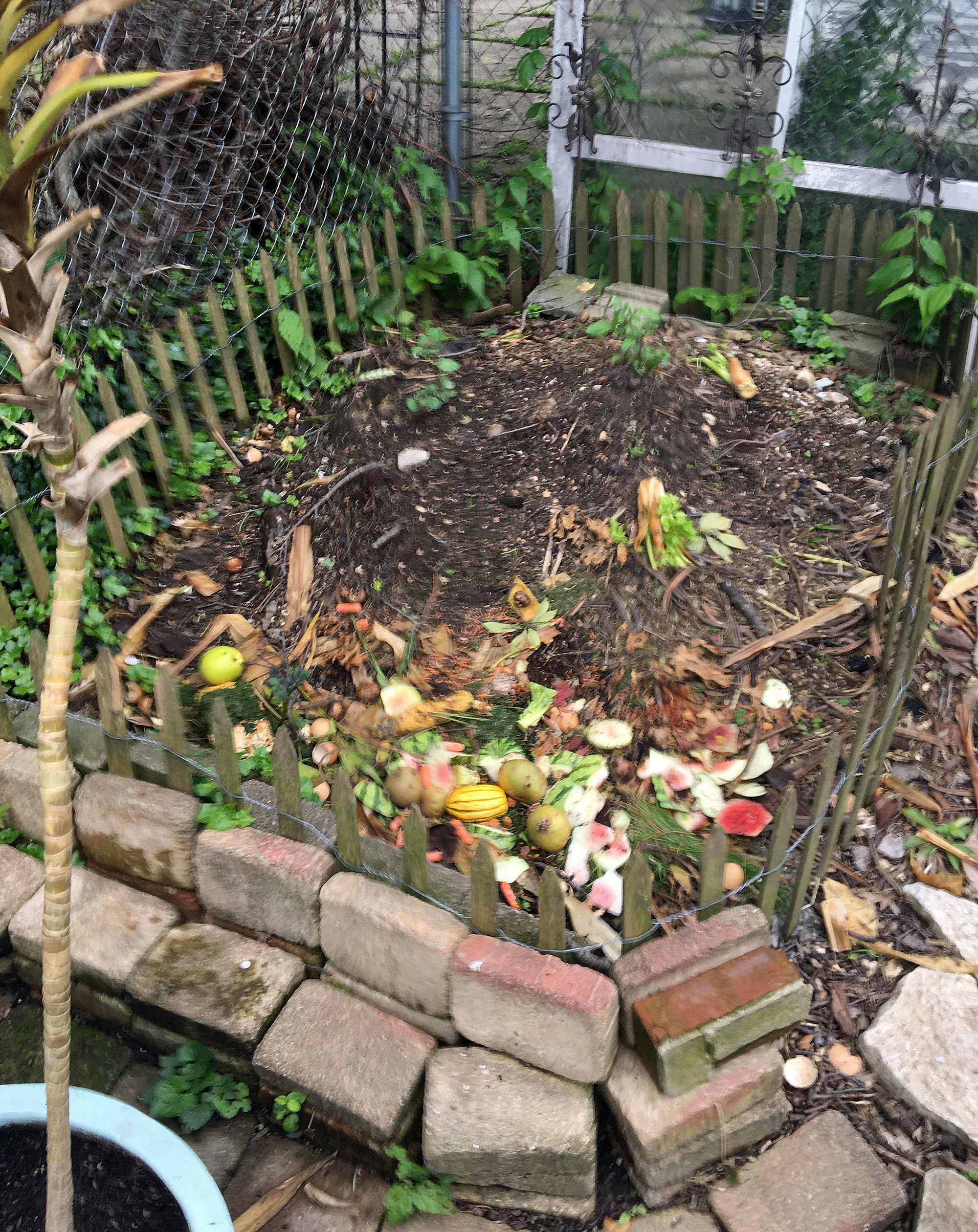
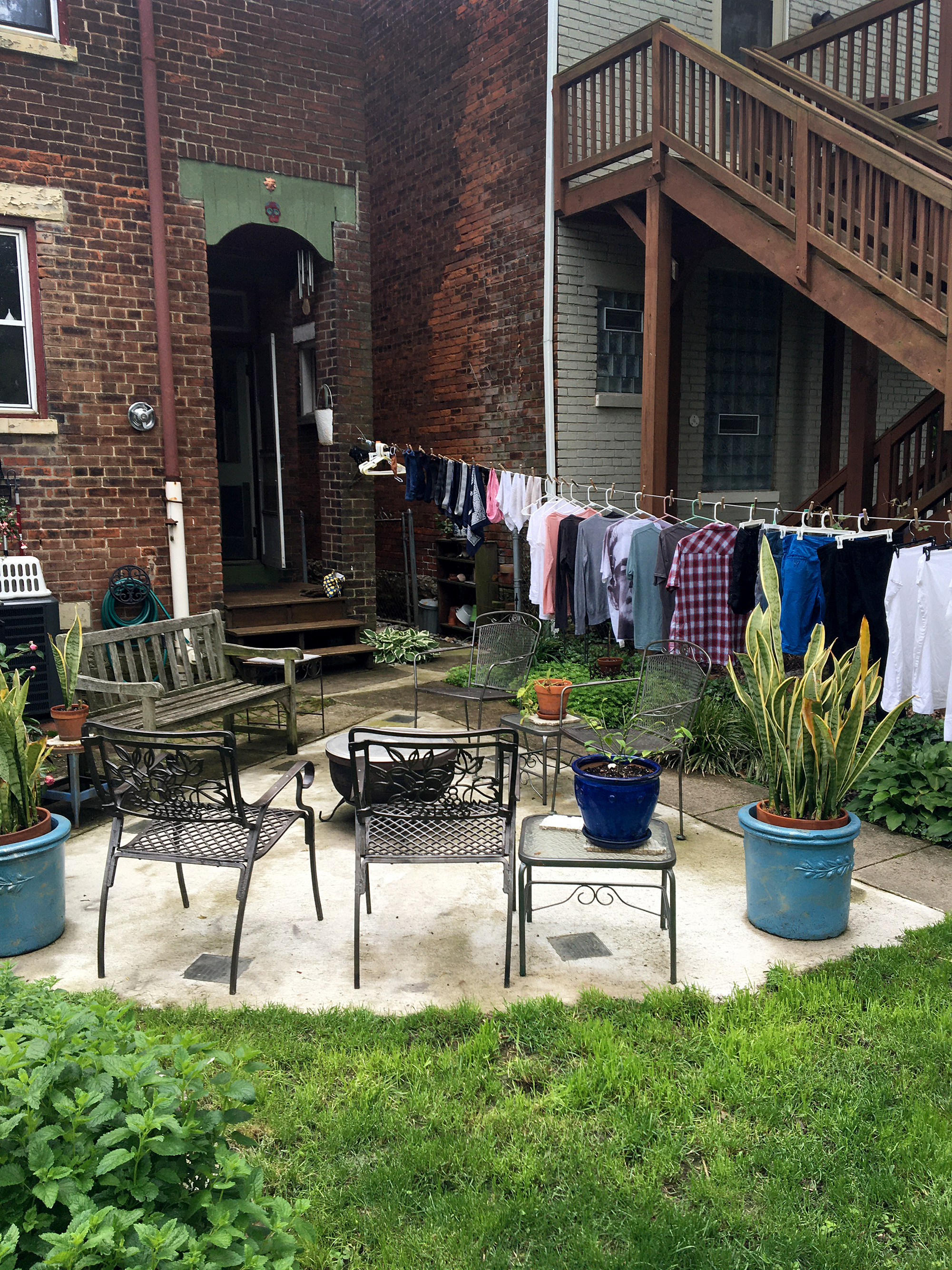 We moved the houseplants out and back inside three different times this past spring (below). Except the really big heavy ones I have to use a two-wheeler to get out, because really I’m only going to move those in the spring and the fall. I guess we really should have until the real last frost because they took a beating with repeated cold snaps, thunderstorms and then hot days. That’s Cincinnati weather for you. Wait a few minutes and it will change.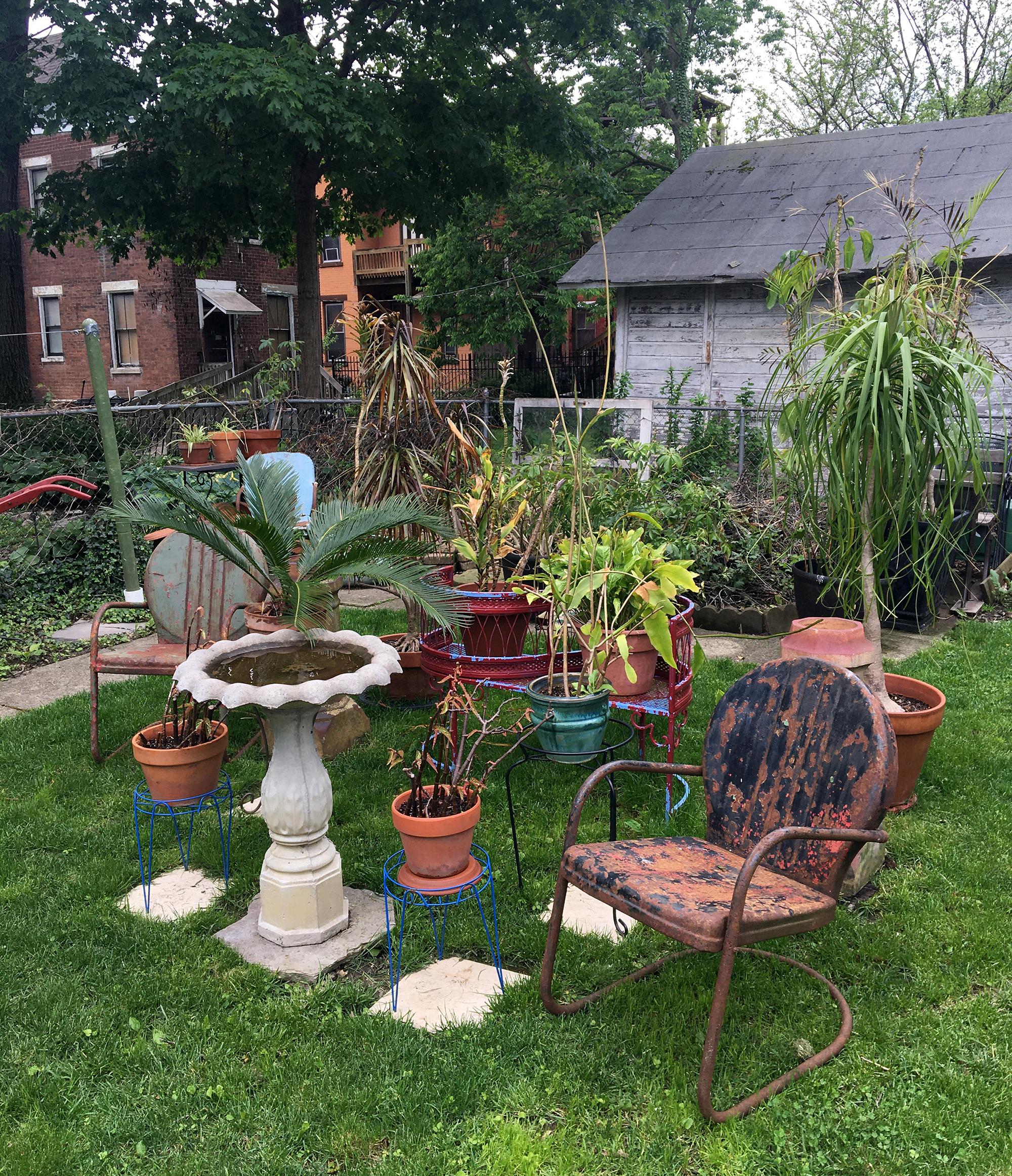
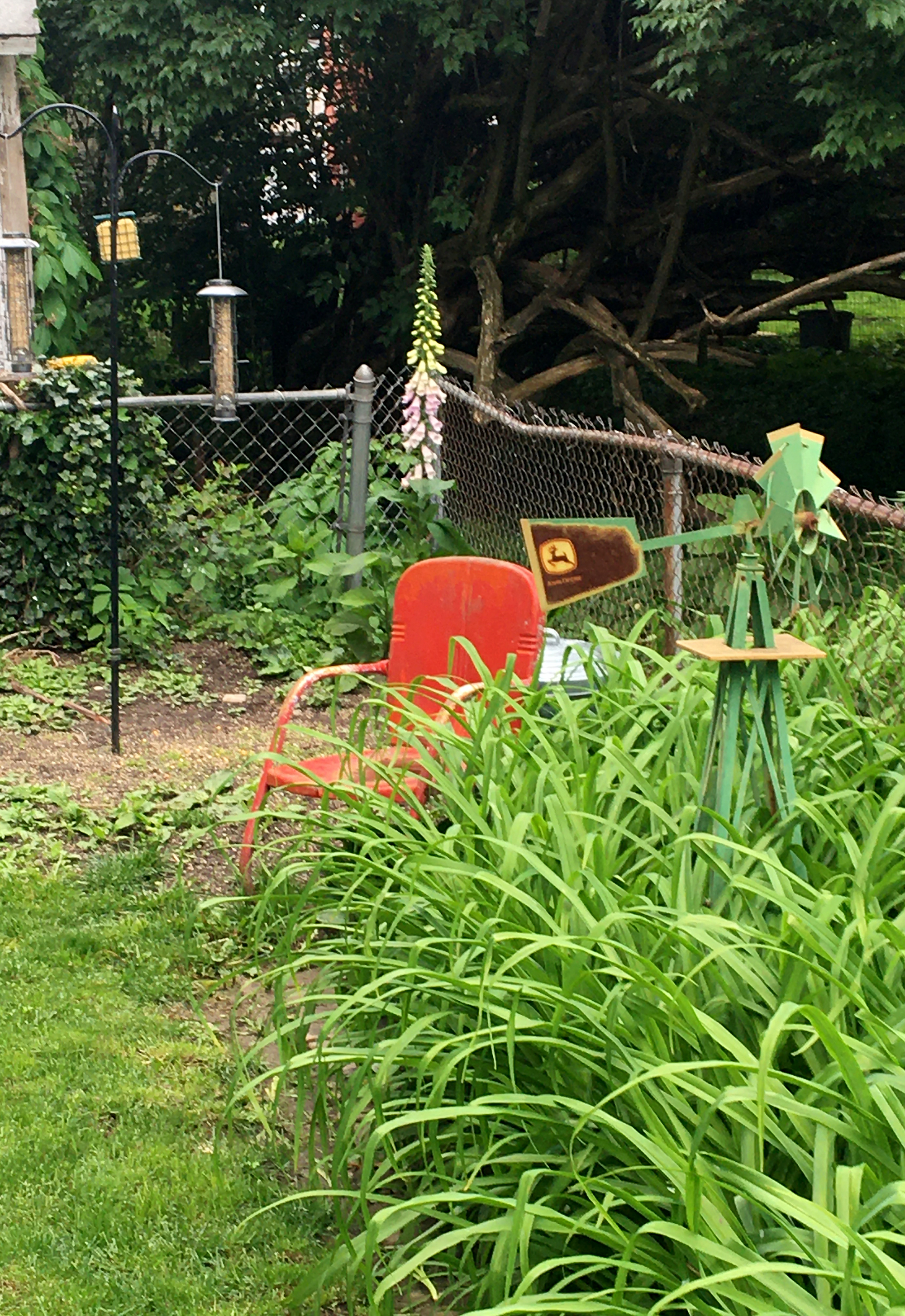 On the other hand some seed we planted a few years back finally sprang up. We’ve been attempting to get a wildflower patch going around the birdfeeders, because it gets pretty messy around there anyway. Last year a bunch of sunflowers came up from the seed the birds left behind. We also had some borage and other stuff in there. But this year the foxglove seeds we put down -well, at least one- finally came up and made an appearance (above).
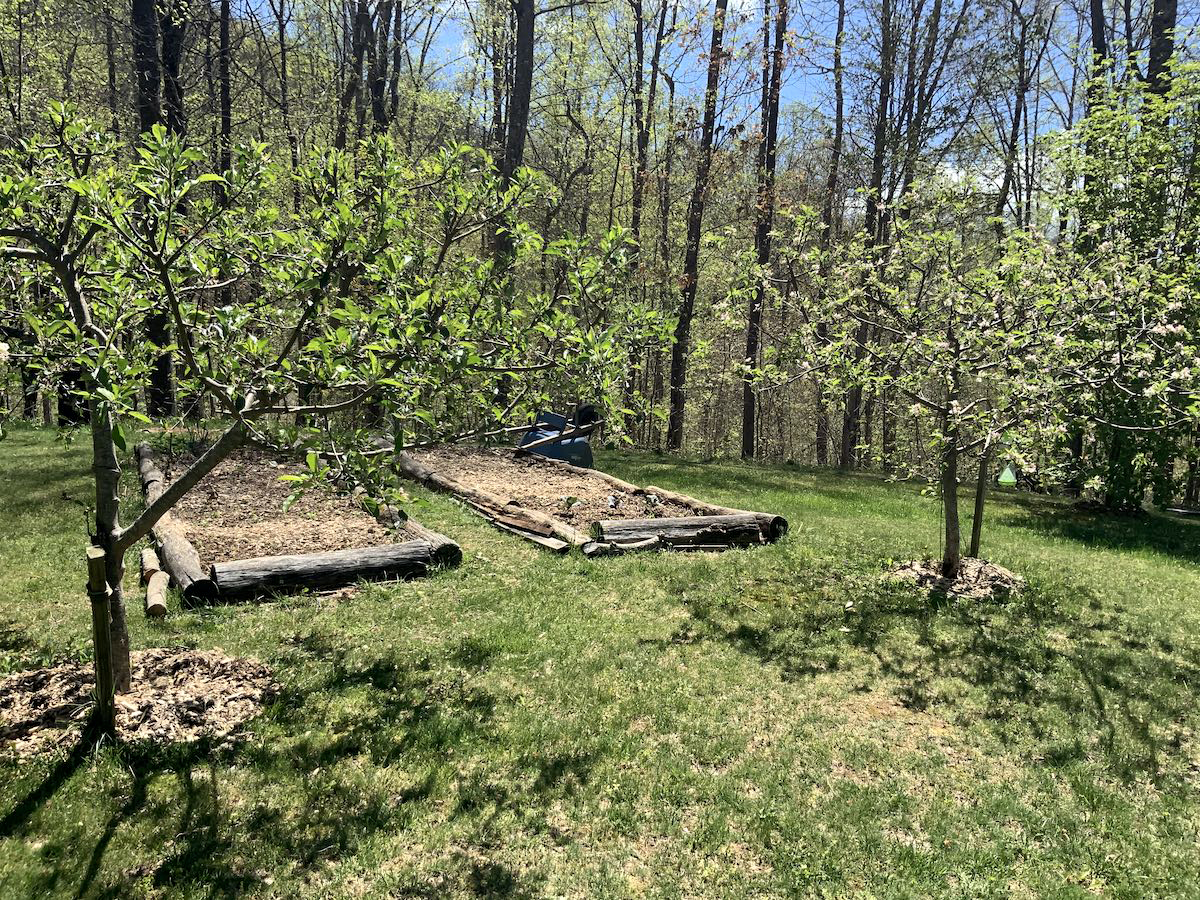 You know we love seeing other people’s gardens and a friend of ours Thomas sent in some great pictures of his space atop a mountain in western North Carolina, USA and we love it!
His vegetable beds are at an early stage of growth he told us but they still look impressive, we love those logs! “We’re still not beyond our last frost date, so the veggie garden is still very young. Indeed, we even had a few snow flakes last night.” Being up in the mountains the garden is 2-3 weeks behind the valley below.
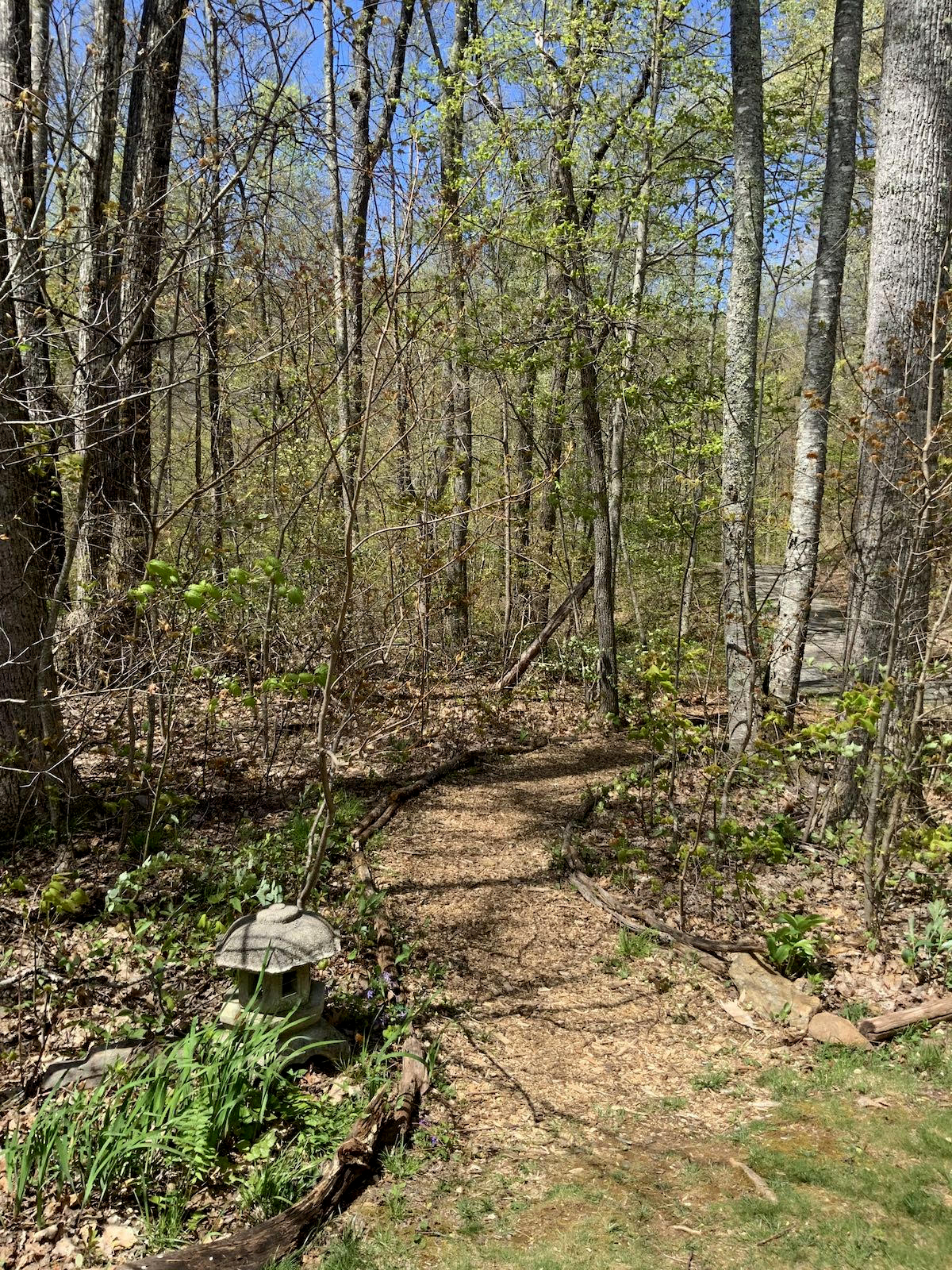
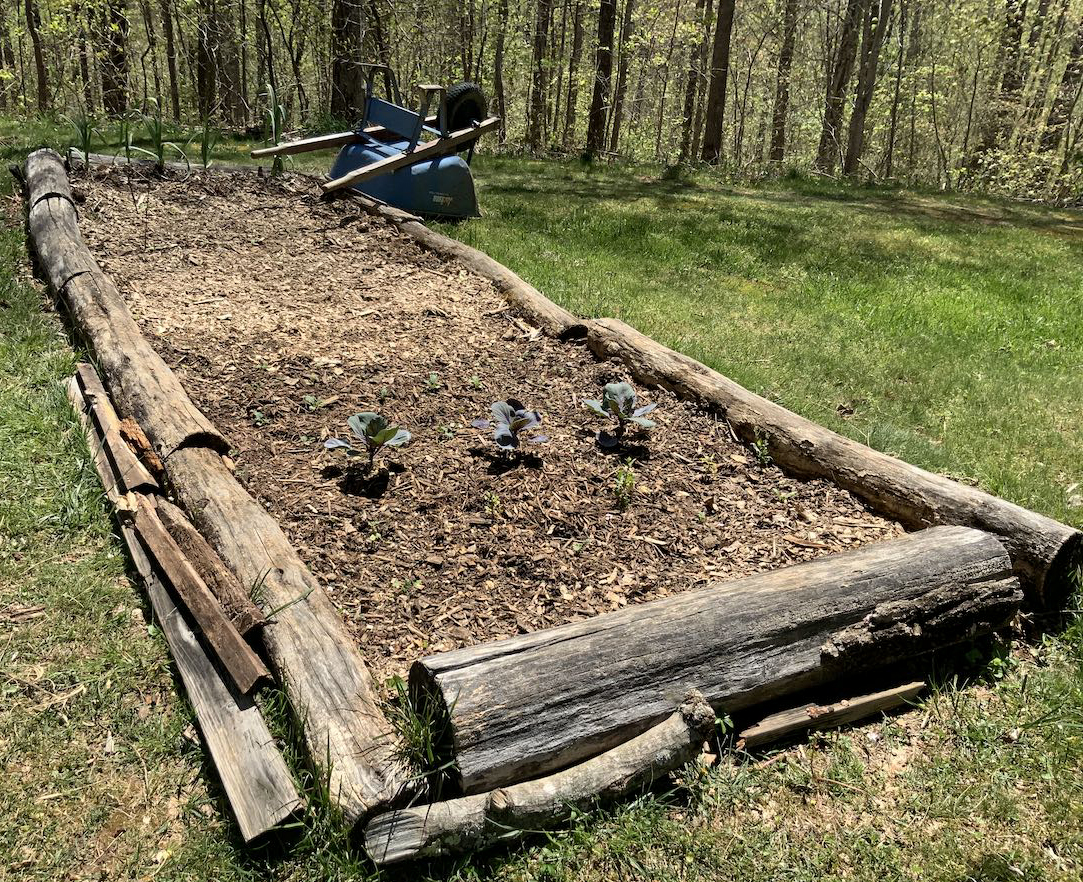 He said “Keep your expectations low, this is basic gardening”, wow keep them low, how can we do that with all that lovely scenery! Thomas mentioned “We go for what I call a “National Park” look. The sort of landscaping we find here at national/state parks: basic, using natural materials, and almost exclusively native plants.”
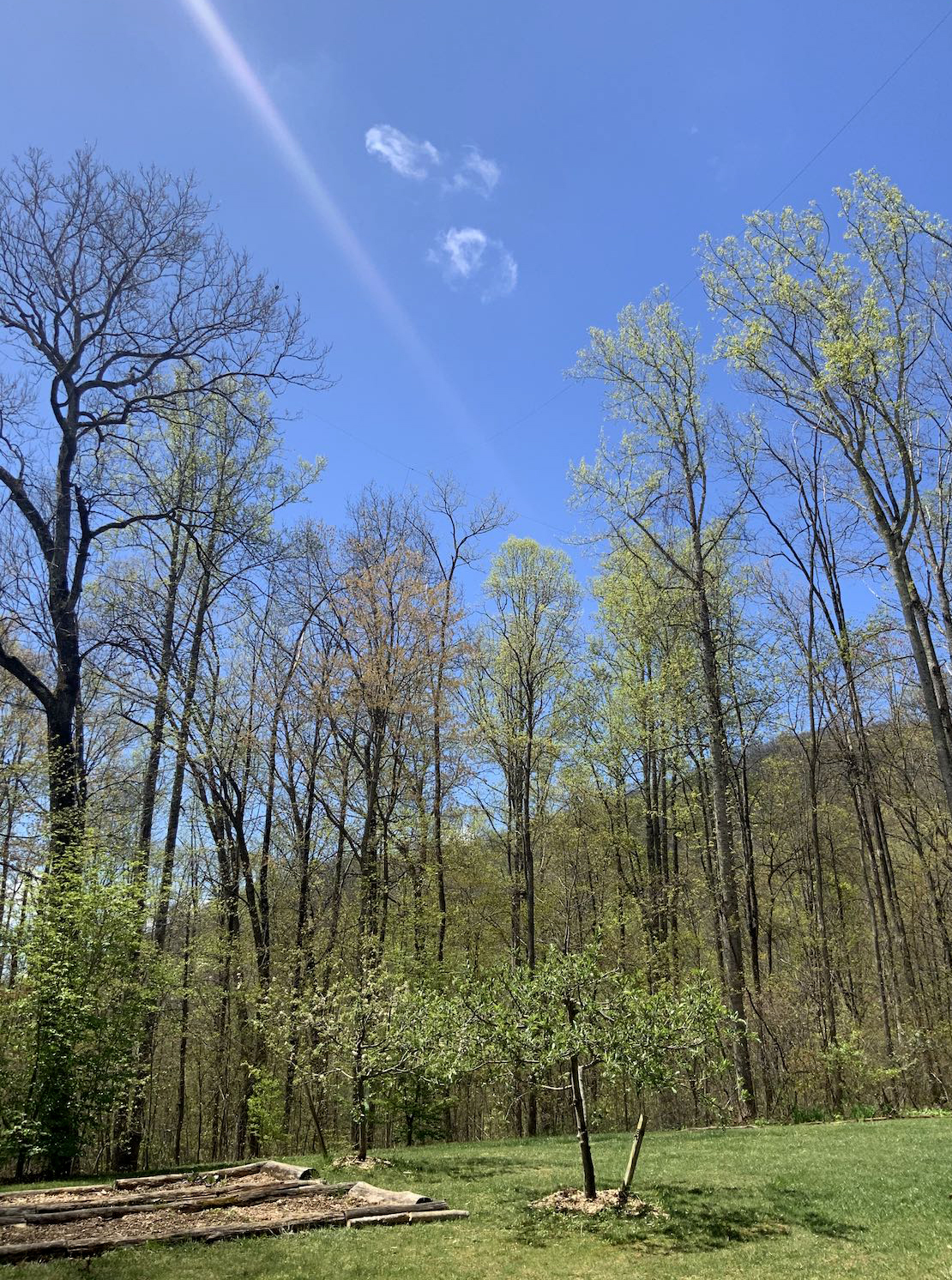
Thomas’s space puts us in mind of Zdenko Franjic (DJ Zdena)‘s garden in Zagreb, Croatia another lovely spot which we covered a few years ago (more on Zdenko‘s garden here.)
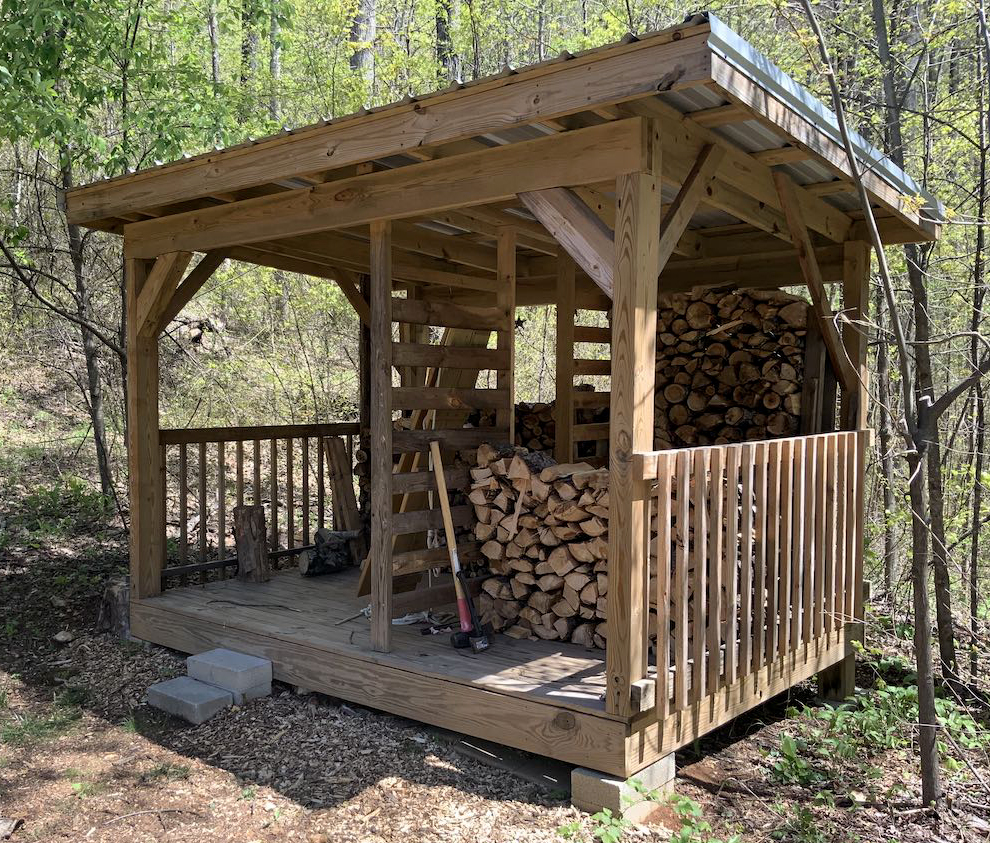
Thomas also included a photo of his wood shed (above) “I’ve been spending an incredible amount of time this year sawing down trees and splitting wood. What’s in the shed is a fraction of it. Kind of back-breaking, but somehow satisfying at the end of a day.” What a lovely looking wood shed. We live in a place called Forest Hill but sadly there’s no wood-chopping done around these parts but if there were, we’d want a wood shed like that.
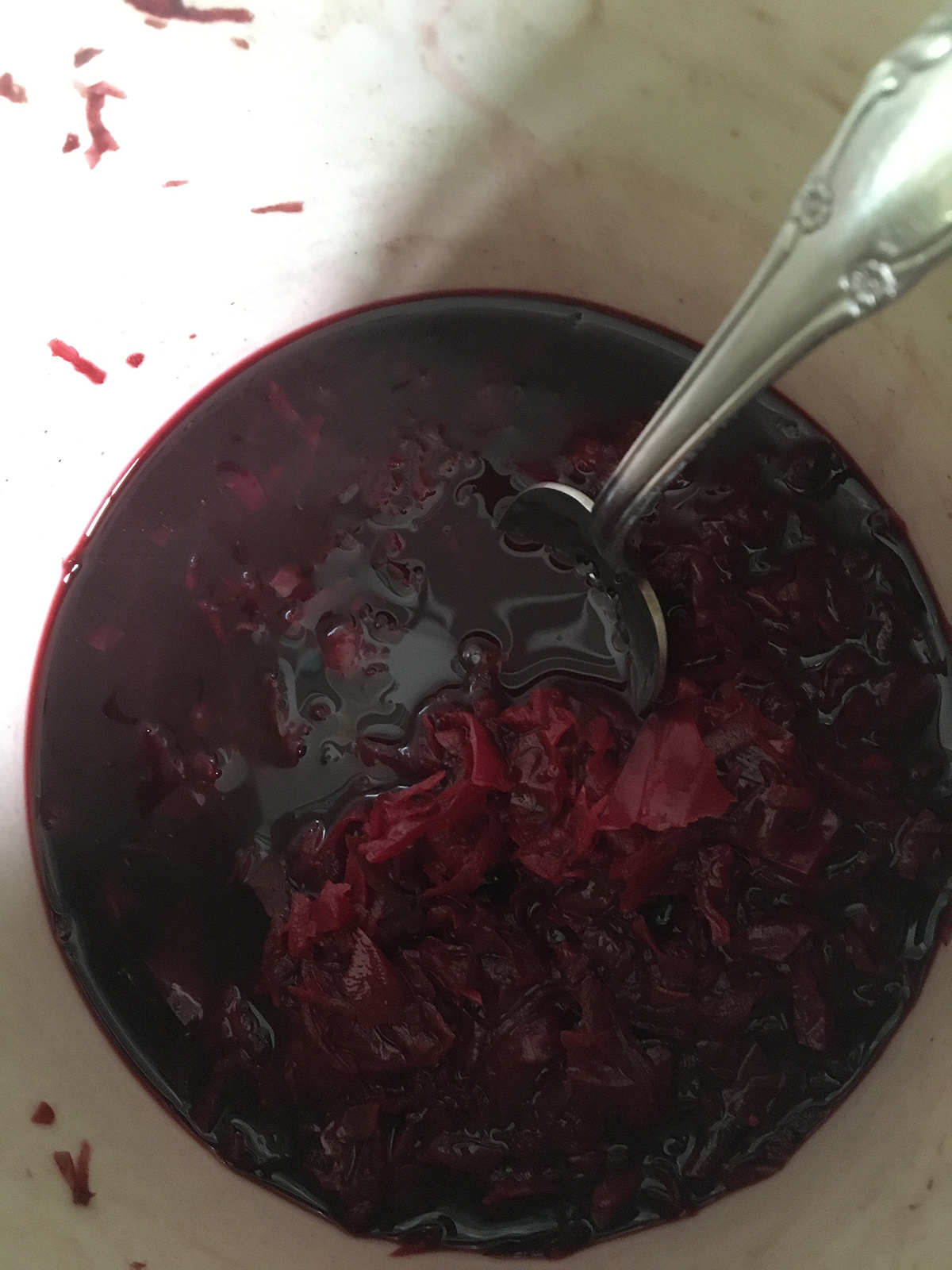
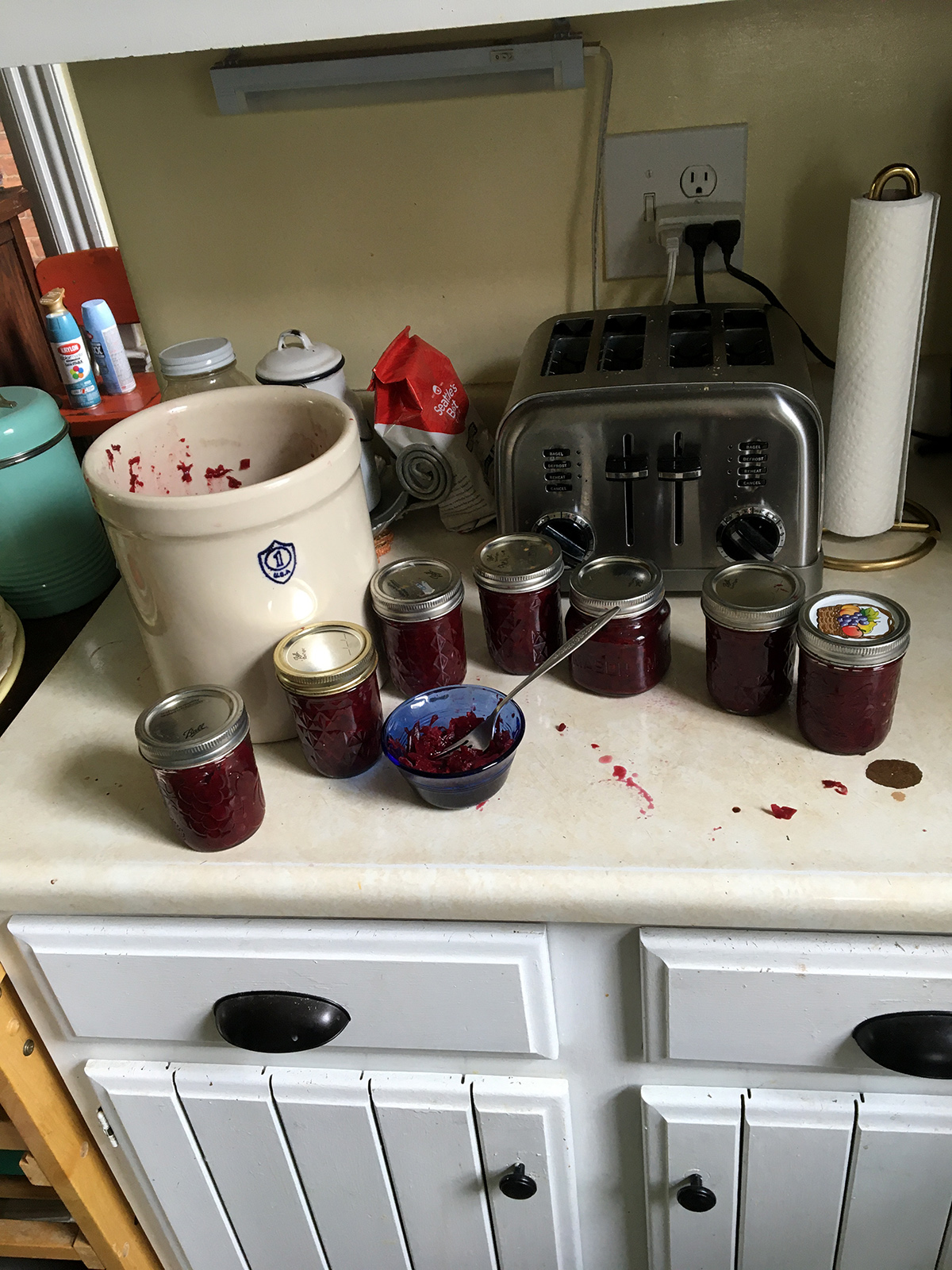
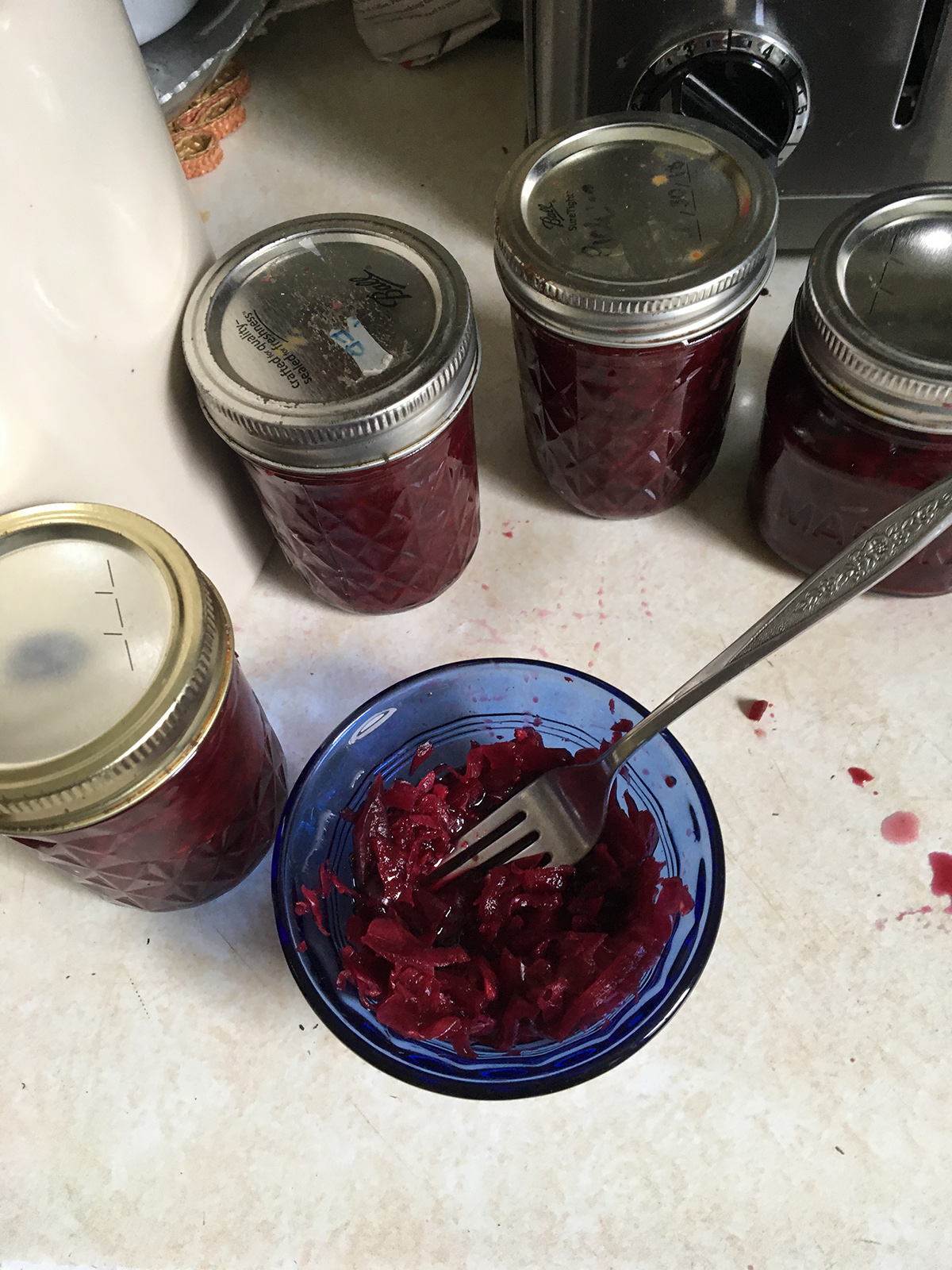 There is nothing like some good down beet veggies, and downtempo music, to get into an up beet mood. I was thinking of this yesterday when scraping out the remains of my crock full of homemade beet and red cabbage sauerkraut. I was also thinking about something I recalled from Sandor Katz’s book Wild Fermentation (where I learned the basic techniques for making kraut and sour pickles, among other things). He said something along the lines of “The only difference between rotting vegetables and a fermented food is salt.”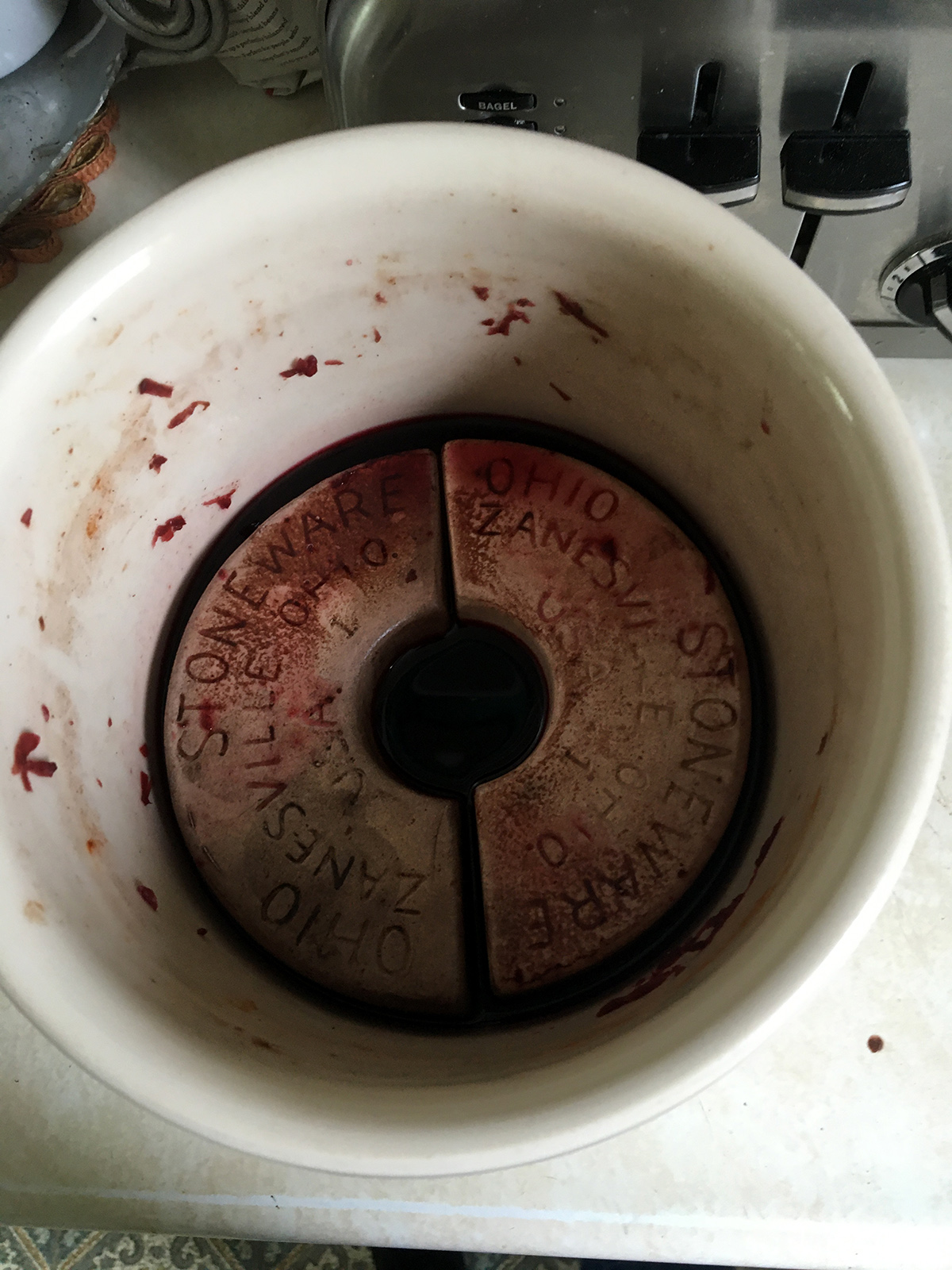
 With all that, I’ll leave you with this groaner and a track called Cultivator Dub from the DJ Spooky vs. Twilight Circus Dub Soundsystem collaborative album Riddim Clash.
 Weeds up to me knees