Forget what we said about seed tapes

There is a downside to seed tapes we found out after buying a bargain assorted vegetable tape off ebay. Turns out the names of what seeds they are, are only at the beginning of the tape (not all the way through) and now we’ve sowed a few we have no idea what’s what except brussel sprouts. Who told us seed tapes were a good idea?

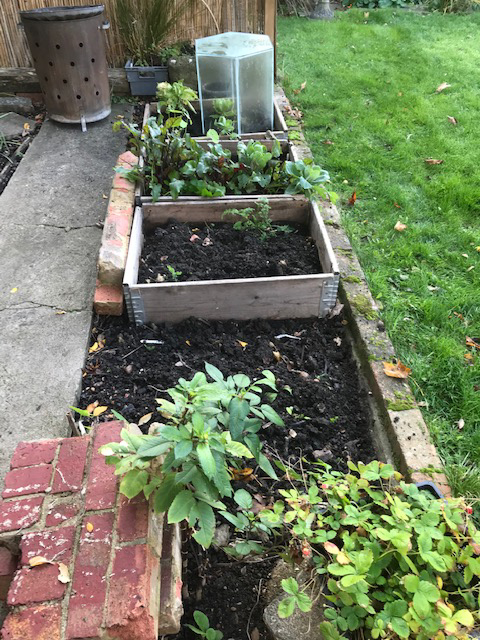
And after a couple of hours hard graft today the front wall (nearest the road) can now be seen, trouble is the mass of ivy on the top right of the picture is covering a piece of wall that isn’t there. We’ll get back to you tomorrow with our solution to the problem.

And the first delivery of guinea pig straw (with added roadent waste) was left on the garden fence in a plain carrier bag with no note but we had a vague idea what it was when we spied it. The contents have now been dumped into the heap and we will keep you updated on its progress. We’re an interesting lot aren’t we? Blame the lockdown.

Essential lockdown shortwave listening

https://soundcloud.com/thisisamusicshow/this-is-a-music-show-060

Here’s last week’s excellent This is a Music Show with some great stuff on it from Tortoise, Stereolab and Aphex Twin and lots more. And it’s all in something called Comb Stereo too! A show well worth tuning into to as per. A big shout to “Your host” and also Daz Man for the nice SDR recording.

https://soundcloud.com/djfrederick/free-radio-skybird-april-26-and-may-3-2020

And here’s this Sunday’s episode of Free Radio Skybird in a clean audio preview style. It’s a well interesting mix up with Justin Patrick Moore’s tribute to Genesis Breyer P-Orridge in the Radiophonic Laboratory (at 24 mins in), One Deck Pete with “Radio connects us all” (35 mins in) with some great tunes from Sasskia, Mokka and Camille Murray and at 46 mins in we have Shane Quentin from the Garden of Earthly Delights radio show who brings us a lesson in “Radio Re-flex-ology” with the likes of F.C. Judd G2BCX, Ronnie Bond, The Pixies and Barry Blue.

Music will see us through these mad times, it really will.

The link between composting and lockdown lunacy

It is a bit difficult to do it with a darlek type bin but we got a garden fork into the compost heap today to give it a good mix up and to get some air to the pile. We could feel a bit of heat in there while we were doing it so it looks like the heap is working.

Since the lockdown we’ve taken the composting a bit more seriously because we’ve got more time on our hands, anything suitable goes in pronto and a trip down there with a single tea bag is not unusual!

We think the neighbours may have noticed our passion for the heap too as we were asked did we want a weekly bag of straw procured from a guinea pig hutch. Turns out the straw and any guinea pig product is alright for composting as it’s classed as a “brown” and would be ideal if you recently had a load of grass clippings deposited as the straw would add a bit of dryness to the heap. We’ll keep you posted on our guinea pig hutch gifts and let you know if they are any help or not!Apart from the composting a good bit of gardening was done in the front, weeding and attacking the ivy on the garden wall and learning that some of it is in fact holding up the said wall. There may have to be a compromise tomorrow when it comes to finishing the job because of that. We’re clearing all of the two tier bed and when things get back to some sort of normality and garden centres are open again we’ll fill it with some shrubs and grasses but it’s good to see it so clear for once! #lockdowngardening

And lay the seed tape on the ground

We received a part of a seed order we forgotten about from Thompson & Morgan this morning. It was a favourite vegetable of ours beetroot and what was good about it was they’re of the seed tape variety. There’s no fiddling about with trying to sow the seeds thinly, spacing them out evenly or trying to keep them in a straight line, the tape does all that for you. We are getting used to this seed tape idea even though it’s been around for a while!

And the seed potatoes we planted straight outside rather than under the cold frames are starting to show through the black membrane that was used for putting under the decking. All we done is cut an X in it and plonked in the seed potato. The membrane will keep the weeds off and hopefully keep warmth in the ground. We covered the tips of the buds this evening with a bit of soil just in case a frost comes out of nowhere!

Talking of potatoes we’re in the process of tidying up the front garden that isn’t really doing that much. We may copy an idea of a neighbour of ours who the other year sowed some potatoes in his newly designed front garden as they are supposedly good for breaking up compacted soil we were once told at the council. It may be a while before Shannon’s is open again where we can pick up some shrubs so we might as well make use of the ground and grab some potatoes into the bargain!

One alternative to lockdown lunacy

This Sunday coming 26th April 2020, DJ Frederick’s Free Radio Skybird will be broadcasting another show in its weekly spring run at 1100 UTC (1200 UK) on 6070 kHz via Channel 292. 

This week’s episode features Justin Patrick Moore’s Radiophonic Laboratory and One Deck Pete’s “Radio connects us all” mix featuring Patrick McGoohan, Sasskia, Mokka and Camille Murray. We’ve also the debut of Shane Quentin from the excellent Garden of Earthly Delights radio show who’s bringing us a bit of “Radio Re-flex-ology”.

Tune in using your shortwave radio in the 49 Metre band on 6070 kHz or by using the link here. It’s going to be one interesting hour!

What you can actually do in ten seconds

A big shout to Gerry Hectic who told us about this compilation when they were originally looking for contributors. This compilation has over 200 10-second tracks and is released by ATTN:Magazine here. What’s great about it is that ALL proceeds from the sale of the set are donated to the charity Cool Earth who work alongside rainforest communities to halt deforestation and climate change.

There’s ten seconds from a variety of sources including Gerry Hectic, Justin Patrick Moore and Madtone amongst many many others! Cheers to Jack Chuter for including our track!

Can’t wait, won’t wait, will try

Patience, that’s what you need when it comes to this gardening lark. Sadly we haven’t got any.

This week we took the dahlia tubers straight out from under the stairs (where they’ve been hibernating since late autumn) and into the ground even though there’s still a chance of frost. We also left a couple of them in the garden from last season as we couldn’t be bothered to dig them out. Why do we do these things when we know we shouldn’t?

We have got protection for them and the other plants that don’t do well when it comes to frosts though. There’s the seed potatoes under the black membrane that was used under the decking and lots of DIY plastic/wood contraptions (don’t throw out your jam jars!) over vegetable seedlings that are germinating so it ain’t that bad.

All the gardening books tell you to be aware of late frosts, they also tell you that runner beans seeds don’t like sitting in cold soils and “for god’s sake don’t put out your tomato plants out early as they’ll suffer if it gets cold” but we still do it (we’ve a couple of tomato seedlings in the ground at the moment we’re ashamed to say.) It goes like this, we see a period of lovely sunshine so the hoe is taken out from its winter hiding place and then it’s all systems go after that. We don’t think this lockdown has helped in holding back either.

Talking of lockdowns, there’s a new gardening-related game developing here. At least once a week on our (very) regular visits to the compost heap a gloved hand will be thrust into the mass of rotting vegetables, old ripped up leccy bills and single tea bags to “feel the heat”. That’s not normal behaviour is it? Early signs of “lockdown lunacy” perhaps?

When does the weekend actually start during lockdown?

The big lockdown’s a lot better when the sun’s out, but it was cold and grey today in SE23 so spirits were dampened. It don’t look that better tomorrow so any gardening jobs will have to wait. Saying that, the single teabags and the odd banana skin still have to be taken down the compost heap one by one so we still can pick out the odd weed by hand on the way back up to the house, so gardening won’t stop, it’ll just be on a slower scale!

Even though there’s no frost predicted here, the spuds and the other early vegetable seedlings are safe and warm under the Blue Peter type cold-frame constructions and the few dahlia tubers we put in (far too early) this week are covered with the plastic mini-cloche type things we found in the street a long while ago.

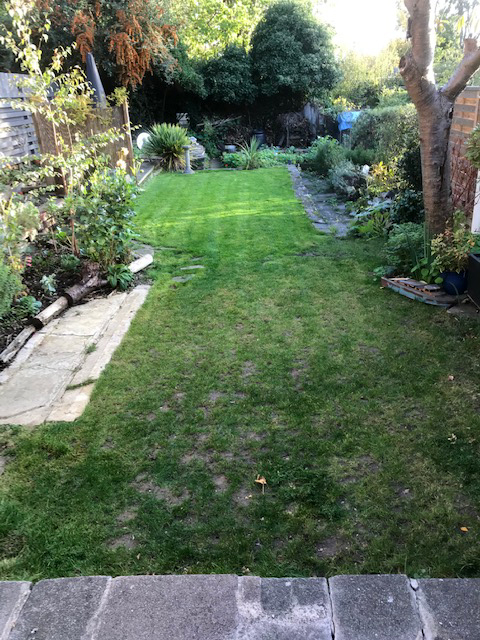
Here’s a picture of happy gardening climes earlier this week before the sun went away and the below is a lovely bit of dub from Camille Murray called Find Your Way To Love which will be featured on the “Radio connects us all” mix to be broadcast on shortwave on Free Radio Skybird on Sunday April 26th at 1100UTC via Channel 292. Don’t let the lockdown get you down too much, it will end just as you are getting used to it.

Ooh, look, there goes compost again

So you’re in lockdown and you want to do this gardening lark as cheaply as possible, so why not get yourself a compost heap? It costs next to nothing, you can recycle your kitchen peelings and it’s not that difficult. Here’s a rerun of a piece we posted up in 2017 about composting basics…

One of the best things you can do as a gardener – especially one on a budget – is to make your own compost and, contrary to popular belief, it’s easy to do. It’s an inexpensive way of putting goodness back into your garden, especially if you don’t regularly feed your soil.

It is one of the finest soil improvers there is; it can be forked in, left on top of the earth for the worms to work in or even made into a tea and applied as a liquid. Adding compost provides a slow-release supply of nutrients and elements, feeding plants over a long period of time. It adds structure to the soil, helps to retain its moisture and feeds the worms and micro-organisms, keeping the ground in good shape. A great exchange for recycling some home waste.

Some gardeners seem to be put off making compost, thinking it will smell to high heaven, attract all sort of vermin or fear they will be left with a pile of garden waste that will never rot. We were like that but have been converted to compost production after learning the hard way; we’ve opened the lid of the bin to receive a faceful of fruit flies (always open the lid away from you!), we’ve came face to face with a rather large roadent happily napping on top of the heap and disposed of a couple of earlier attempts of heaps that had been sitting around for years consisting of sticks and prunings wider than the thickness of a finger.

When you compost, fungi and aerobic bacteria initially eat the waste matter in the pile – the carbon and nitrogen content a source of their energy and protein – creating carbon dioxide and heat. When the pile cools, worms – alongside varying insects – reduce it further by eating what is left and pass it through their guts. Soil organisms then break it down again and ripen the material turning it into compost.

There are lots of structures on the market for composting but many are not an option for us gardeners doing it on the cheap, though local councils supply plastic Dalek-shaped bins free as part of their recycling campaigns. These keep the rotting waste in and unwanted vermin out but because of their size can be difficult to mix (something you should do regularly to add air, a component needed in the process).

A composting container can be made out of wood – the classic square-shaped enclosure with a top (you could even use a bit of old carpet) to shield off the rain – or although not aesthetically pleasing, the waste can be just left to rot in a pile (which will probably not please the neighbours). Whatever method you use, it should be placed somewhere easy to get to, possibly screened from view and preferably in a position where it will get some sunlight which will add heat to the pile helping it to rot. In an ideal situation you would have two (or more) bins on the go, one started the year previously now yielding compost and the other for putting recent waste in.

The ingredients used in composting are “greens” (ones containing nitrogen) and “browns” (carbon) combined with water and air. Examples of “greens” include: grass clippings (applied sparingly as they turn to a smelly mush if used too thickly), plant waste (no flowering weeds or diseased material) and kitchen waste (vegetable peelings, ripped-open teabags and over-ripe fruit). The “browns”: cardboard, ripped or scrunched-up newspaper and small twigs (nothing larger than 1/4” unless put through a shredder). Cooked foods, fats and meats should be avoided at all costs unless you want to attract vermin and be very wary of putting salad leaves from left-over meals if meat has been on the same plate too. This is possibly where we went wrong which attracted the sleeping visitor to our pile thus giving us a fright in the process so be extra careful with what you add.

No matter how prudent we are though when filling the bin we still manage to find when the compost has matured some strange stuff: the odd ballpoint pen, elastic band and on one occasion a plastic Dr Who sonic screwdriver, usually prompting us to say “How did THAT get in there?”

Most important is to get the balance of ingredients right. It does vary depending on what gardening books you read or which gardening guru you follow but a 50/50 ratio of “greens” and “browns” will suffice. You simply add layers of material – ideally alternating “greens” and “browns” – one to two inches deep, interspersed with a light layer of soil every so often. Turning the pile regularly using a garden fork makes sure that it doesn’t get compacted and that air can circulate freely. If the compost looks too wet, smells foul or attracts fruit flies this indicates there’s too much “green” material, so more “browns” should be added. If the pile has dried out – especially during the summer – more “green” material and a little water will correct it. Worms should come naturally to your heap – especially the red brandling ones – but if you want to add more, lay down some wet cardboard in your garden and in a week you should have a few on the underside to put in the pile. Don’t worry, they will multiply!

Depending on how much heat is generated in the heap and how balanced the materials are, you should be the proud owner of home-made compost in around a year. If you want to speed up the process there are compost activators – basically extra nitrogen – on sale at garden centres, but this can be done for free by adding nettle, comfrey and borage leaves which will in turn add more varied nutrients to the finished product. Another activator is human urine, best applied out of a plastic bottle for obvious reasons.

You will know when your compost has fully matured when it has a crumbly texture, an earthy smell and looks as described in an old gardening book,“rich like a Christmas fruit cake”. This pile of gardening goodness is now ready to be applied to your soil.

There’ll be times when things won’t seem to go right with your compost heap but once you get it correct and see the results you get from using it, you won’t want to look back. Your garden will thank you for it in kind and you will soon be growing the healthiest looking flowers, fruit and vegetables and will never yearn for pay-through-the-nose-farmers-market-produce ever again. You will then realise why home-made compost is known in the gardening world as “black gold”.

#Composting #Blackgold #Compostheap #compostingtheeasyway

And my god we need cheering up…

The first in an occasional series by One Deck Pete called “Tunes to Cheer you up” which will feature every now and again on Free Radio Skybird on the shortwave via Channel 292.

Here’s the debut tune to cheer you up with, recorded off an online SDR located in Belgium earlier (here), the audio comes with added fading and noise which weren’t there on the original recording. Enjoy Funk Reverse with In & Out” (DJ Moy’s dub version) on Sound Exhibitions Records. A tune!

The lockdown’s just kicking in…